What makes a hobby eco-friendly
An eco-friendly hobby is not one that is completely zero-impact. It is a hobby where the satisfying part comes from growing, gathering, mending, reusing, or making something that lasts, rather than from buying a new kit every month.
Look for hobbies with reusable tools, local materials, and sessions that do not depend on shipping, packaging, or frequent replacements. A pair of needles, a starter culture, a walking route, or a bundle of foraged leaves can carry you through years of sessions.
Good eco-friendly hobby patterns
- Growing and foraging: seed saving, mushroom growing, houseplant collecting, foraging, and bushcraft.
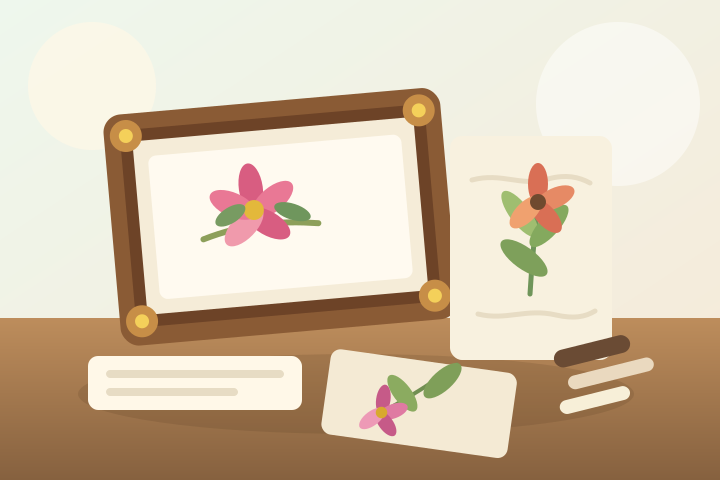
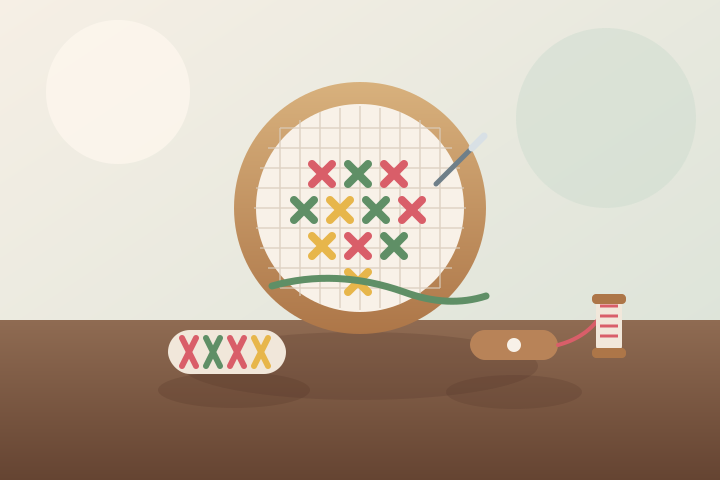
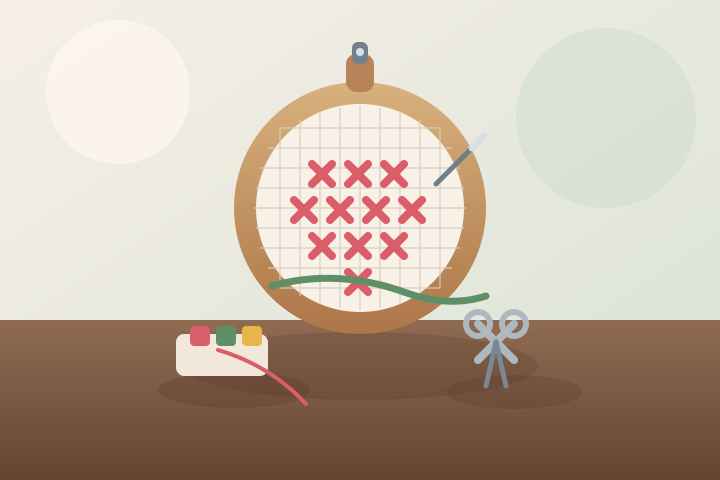
- Low-consumption making: knitting, crochet, embroidery, natural dyeing, papermaking, macramé, and flower pressing.
- Food that uses what you have: fermenting, sourdough, baking, cooking, and tea brewing from loose leaves.
- Nature observation: birdwatching, hiking, geocaching, letterboxing, and orienteering.
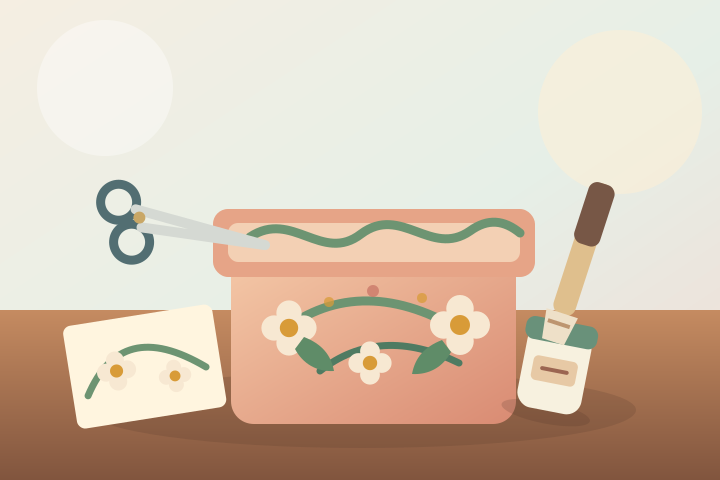
- Repair and reuse: mending, bookbinding, decoupage, and turning old materials into new projects.
Small swaps that make any hobby greener
You do not have to change hobbies to make them lighter. Buy second hand, borrow tools, choose local materials, and repair before replacing. Keep a small box of spare buttons, thread, glue, and twine so a broken project gets fixed instead of binned.
Prefer hobbies where the materials are the by-product of something else: fallen leaves for pressing, offcuts for weaving, kitchen scraps for fermenting, or worn fabric for patchwork. The hobby then feeds on what would otherwise be waste.
Start with one low-waste habit
Pick one short session a week and give it a clear finish line: one mended item, one batch of starter, one walk with a notebook, one small project from materials you already own.
Do not try to make every hobby sustainable at once. When one low-waste habit feels easy, add a second. Over a year, a few small habits quietly replace a lot of packaging, waste, and impulse buying.





























.jpg?width=900)