Who It Suits
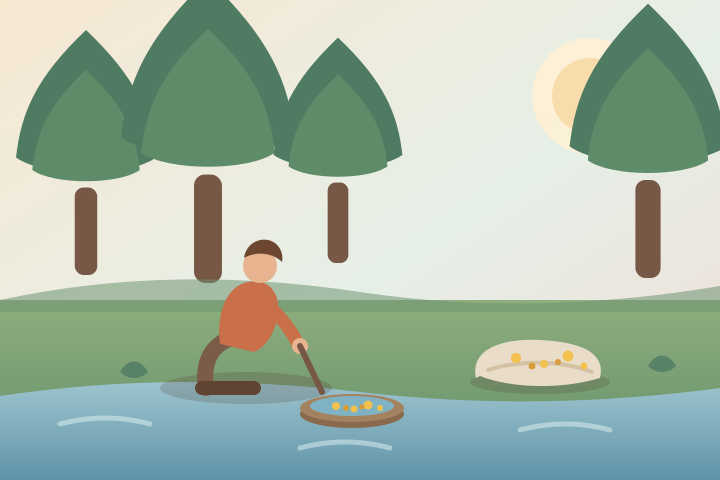
Gold panning is the practice of separating gold from stream gravel using a pan, exploiting the fact that gold is far denser than the rock and sand around it. A beginner’s first sessions are mostly about one skill: loading a pan with gravel, swirling it in water, and washing the lighter material away until only the heaviest grains remain — then checking whether any of them are gold. It suits people who enjoy slow outdoor work, geology, and the quiet chance of a find, and it rewards patience, local knowledge, and reading a creek the way anglers read water. The appeal is real but honest: most sessions turn up little or no gold, and the reward is as much the process, the place, and the skill as the flakes in the pan. The constraints are real too: you depend on legal access to water, on creeks that actually carry gold, and on seasons when streams have flow. This page covers recreational placer gold panning with a hand pan; sluicing, dredging, and hard-rock mining are separate activities with their own gear, skills, and rules.
Getting Started
Start by learning the rules for your area before buying much gear. Recreational gold panning may be allowed on some public land, but requirements vary by country, land manager, waterway, mining claim, and method; some places require permission or a permit, and others are closed. On US Bureau of Land Management land, low-impact hand panning can qualify as casual use, but not on every parcel, and an existing mining claim requires the claim holder’s permission. In the UK, access permission from the landowner does not by itself grant a right to remove gold: gold and silver are generally classed as Mines Royal, and taking them requires the relevant mineral owner’s permission. Australian rules differ by state or territory, and some require a miner’s right or prospecting licence. Check with the land manager and mining-rights authority before visiting; local prospecting clubs can also help identify beginner-friendly legal sites.
Before your first trip, check:
- Whether panning is allowed on the land and water you plan to use, and whether a permit or licence is required.
- Whether the creek has a history of gold production — old workings, dark gravel, and black sand are good signs.
- The water level and weather for your dates; panning needs a flowing stream and safe footing.
- Whether you are panning for fun or keeping what you find, and the local rules for either.
Key Terms
Gold panning uses a small vocabulary that prospecting clubs and supply shops rely on. In plain English:
| Term | Plain-English meaning |
|---|---|
| Gold pan | A shallow, often black plastic pan used to separate gold from gravel by weight. |
| Placer deposit | Gold that has been washed out of rock and settled in a stream bed, as opposed to gold still in its parent rock. |
| Lode | Gold-bearing rock in place, the source that placer gold eventually washes out of. |
| Black sand | Fine, dark magnetic minerals (mostly magnetite) that settle with the gold and are the main thing to separate it from. |
| Riffle | A shallow, fast stretch of a stream over gravel; a classic place to find gold. |
| Specific gravity | How dense a material is compared to water; gold’s high specific gravity is what panning relies on. |
| Flakes | Thin, flat pieces of gold, the most common find for beginners. |
| Nugget | A lump of gold; rare, and the stuff of prospecting stories. |
| Sluice box | A long trough that uses flowing water to concentrate gold from larger amounts of gravel. |
| Gold cradle | A rocking box that concentrates gravel by shaking and water flow. |
| Gold bottle | A small vial for storing and displaying the gold you find. |
| Panning technique | The sequence of swirling, tilting, and washing that removes light material without losing gold. |
Basic Gear
Essential for a first trip:
- A gold pan (a 12–14 inch plastic pan is the common beginner size).
- A shovel or small spade for digging gravel.
- A bucket for carrying gravel and water.
- Waterproof boots or waders for standing in the stream.
- A gold bottle for storing finds.
- Weather-appropriate clothing, sun protection, and a hat.
Optional at first: a sluice box, a classifier or sieve for sorting gravel, a magnet for removing black sand, and a small kit of panning tools.
First Session
A simple first-session plan:
- Choose a riffle or the inside of a bend in a creek with a history of gold, where the water is shallow enough to stand in safely.
- Dig a pocket of gravel a little upstream and scoop a panful of mixed gravel and sand.
- Submerge the pan and swirl it in a circle so the heavier material settles to the bottom.
- Tilt the pan and let the lighter material wash out over the rim, repeating the swirl-and-wash until only the heaviest grains remain.
- Check the pan: black sand is the usual result, and gold shows up as small yellow flecks among it.
Treat the first trip as learning the creek and the technique rather than proving the hobby in one pan of gold.
First Month
A realistic sequence:
- Weeks 1–2: return to the same creek a few times and practise the swirl-and-wash technique until it feels natural. Keep short notes on where you panned, the water level, and what you found.
- Weeks 3–4: add one new variable — a different part of the creek, a different time of day, or a classifier for sorting gravel before panning.
- Then: try a new creek, or add a sluice box for larger samples — one at a time.
Learn one reliable panning technique, one way to read a creek, and the local rules before adding more gear.
Costs
Gold panning has a low starting cost. A basic gold pan is usually a small one-time cost (often a few dollars to a couple of dozen), plus a shovel, a bucket, and waterproof boots or waders if you do not already have them. Costs rise with a sluice box, a classifier, waders, and travel to distant creeks, but beginners do not need that equipment. Borrowing, renting, or buying used keeps early costs low, and a local mining supply shop can point you to beginner gear.
Space Needed
The hobby needs outdoor access to a legal, flowing stream and enough room to stand and work safely. At home, a small shelf or box can hold a pan, a gold bottle, and a few tools, and a tray or basin lets you practise the technique with gravel from anywhere.
Solo or Social
Gold panning works well alone, with one friend, or in prospecting clubs. Experienced prospectors can shorten the learning curve and point you to productive creeks, but quiet solo sessions are part of the appeal for many people.
Common Mistakes
- Panning in the wrong spot: fine sand with no black sand, or a stretch of creek with no history of gold.
- Washing too fast and losing gold with the light material.
- Not checking the pan for gold at the end, so a small find goes unnoticed.
- Ignoring land and water rules, or panning where it is not allowed.
- Expecting to get rich; most sessions turn up little or nothing.
- Panning a dry creek in summer, when there is no flow to work with.
- Buying a lot of gear before learning one panning technique.
Safety / Accessibility
Slippery rocks, cold water, fast currents, flash floods, sun exposure, and ticks are the main risks. Practical safety points:
- Wear waterproof boots or waders and check footing before you stand in the stream.
- Check the weather and upstream conditions before you go; turn back in heavy rain, high water, or flood risk.
- Tell someone where you are and when you expect to return, especially if panning alone.
- Wear sun protection and a hat, and carry water.
- Choose a shallow, slow stretch with an easy exit when deep or fast water is not practical.
Gold panning is also a well-supported adaptive activity: most of the work is kneeling or seated at the water’s edge, and adaptive sessions are run by some prospecting clubs and outdoor groups.
Where It Can Go
Gold panning can lead toward sluicing, gold cradles, rock tumbling, lapidary work, geology, gem and mineral collecting, metal detecting, fishing, camping, or quiet lifelong local practice.
References
Last reviewed: 18 August 2026.
This page is an editorial beginner’s guide. The official rule and safety sources below are the authoritative references for permits, land rules, and safe practice; the community resources are optional next steps.
Official rule and safety sources:
- Bureau of Land Management: Surface Management — when low-impact prospecting may count as casual use and when notice or approval is required.
- Bureau of Land Management: Can I Keep This? — collecting restrictions, including existing mining claims.
- GOV.UK: Gold and silver agreement for lease — UK Mines Royal ownership and permission requirements.
- Leave No Trace: 7 Principles — low-impact practice outdoors.
Optional community resources:
- Local mining supply shops and prospecting clubs: beginner-friendly creeks, gear advice, and first-trip help.
- Public land agencies and conservation groups: accessible and adaptive prospecting sessions.
Related Hobbies
Metal detecting, rock tumbling, lapidary, fishing, hiking, geocaching, seashell collecting, bushcraft, and geology all sit nearby.