The Short Version
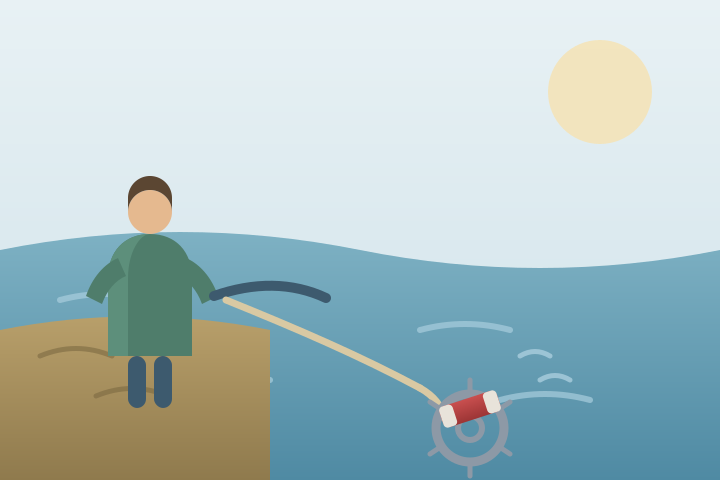
Magnet fishing is a water-based treasure hunt: you tie a strong neodymium magnet to a rope, cast it into a river, canal, lake, or harbour, and pull back whatever the magnet has caught — bicycles, tools, coins, cutlery, fishing tackle, and the occasional genuinely surprising object. It needs almost no skill to start, which is exactly why it has grown from a niche pastime into a popular outdoor hobby, with a large community of people sharing their finds online.
A beginner’s first session is a short walk to a safe, accessible bank, a few careful casts near the water’s edge, and a rope in hand. The appeal is the uncertainty of every pull, the sense of cleaning up a waterway, and the stories behind the objects you bring back. The constraints are real: you need a decent magnet and a strong rope, access to water varies by location, and you must be prepared to handle whatever comes up — including sharp objects, and in some cases weapons, which have legal obligations attached.
Who It Suits
Magnet fishing suits people who enjoy being near water, patient physical activity, and the thrill of the unknown. It works well for curious beginners because the technique is simple — cast, wait, pull — and the first outing is cheap and low-pressure. It is less suited to people who want guaranteed results: some sessions produce a bucket of old cutlery, and the satisfaction comes from the process as much as the finds. It also suits people who like a cause: every pull removes litter from a waterway, so the hobby doubles as a small act of cleanup.
Quick Jump
- Key terms
- Getting started
- What you might pull
- Basic gear
- First session
- Costs
- Safety and accessibility
Key Terms
A handful of words do most of the work in magnet fishing conversation:
- Neodymium magnet — the strong rare-earth magnet used for the hobby, typically a block or cylinder rated by its pull force in kilograms or pounds.
- Pull force — the maximum weight a magnet can hold in direct contact with a flat steel surface; real-world pulls underwater are far less, because of distance, angle, and water.
- Rope — the line the magnet is tied to; rated by breaking strength, usually 100–200 lb (45–90 kg) for beginners.
- Swivel — a small ring that lets the magnet rotate freely, stopping the rope from twisting.
- Shackle — a U-shaped bolt with a pin, used to connect the rope to the magnet’s eyelet.
- The catch — whatever the magnet pulls up, from a single coin to a full bicycle.
- The mystery — a find you cannot immediately identify, from an old lock to a decades-old tool.
- Bank — the land at the edge of the water where you stand and cast from.
- Access — the legal and practical permission to be on the land and in the water; rules vary by river, canal, and country.
- Reportable find — an object with legal obligations, such as a firearm, ammunition, or (in some regions) historically significant items.
Getting Started
Magnet fishing needs no licence in many places, but access to the water and the land beside it is the first thing to sort out.
- Buy a starter kit or a small magnet and rope. A 1–2 kg pull-force neodymium magnet with a 10–15 m rope rated around 100–200 lb is a sensible first setup. Kits are cheap and save you from mismatched parts.
- Find a legal, safe spot. A canal towpath, a public riverbank, or a harbour edge with clear access and no traffic overhead. Check local rules — some waterways, nature reserves, and private land prohibit it.
- Check what is above and below. No boats, no low bridges, no power lines, no busy footpaths in the casting arc.
- Cast, wait, and pull. Your first pull is the whole point of the first outing.
What You Might Pull
| Find | How common | Notes |
|---|---|---|
| Coins, cutlery, small metal | Very common | The everyday baseline of most sessions. |
| Tools, locks, hinges | Common | Often old, often from nearby buildings or boats. |
| Bicycles, wheels, frames | Occasional | The classic “big find” of the hobby. |
| Fishing tackle, hooks, weights | Common | A reminder to check the catch before handling. |
| Household objects | Occasional | Pots, kettles, lamps, and the unexplained. |
| Weapons and ammunition | Rare but real | Handle minimally, do not test, and follow local reporting rules. |
| Historically significant items | Rare | In some regions these have legal obligations — check local rules. |
Basic Gear
| Essential | Why |
|---|---|
| Neodymium magnet (1–2 kg pull force to start) | The core of the hobby; cheap blocks are fine for learning. |
| Rope, 10–15 m, 100–200 lb breaking strength | Strong enough for real pulls, long enough to reach past the shallows. |
| Swivel and shackle | Stops the rope twisting and connects it securely to the magnet. |
| Sturdy gloves | Catches are often rusty, sharp, or slimy. |
| Comfortable shoes and weather-appropriate clothing | You are standing on a bank, often in all weather. |
Optional, and worth adding only as you use them: a bucket or tarp for the catch, a small notebook for logging finds, a head torch for early or late sessions, and a larger magnet (3–5 kg pull force) once you are comfortable with the technique.
First Session
A concrete first outing:
- Pick a calm, accessible stretch of canal or river — a towpath section with a clear bank, no boats, and no overhead hazards.
- Set up your kit on stable ground, away from the edge, and check the knot or shackle connection one more time.
- Cast the magnet a few metres out, past the shallows, and let it sink. Wait a moment for it to settle on the bottom.
- Pull steadily and smoothly. If it is heavy, pull in short, controlled jerks rather than one hard yank — a sudden load can snap a rope or a weak connection.
- Inspect the catch with your gloved hands before lifting it close. Hooks, knives, and broken glass are common. If you pull up something you do not recognise or something that looks dangerous, set it down, step back, and deal with it according to local rules.
- Clean and log the find. A quick rinse, a photo, and a note of where and when — the log is where the hobby’s sense of place comes from.
If you pull up nothing but silt and a single coin, that is a normal first session: the water is full, and the magnet is patient.
First Month
Keep the technique simple and vary the water: try different stretches, different times of day, and different seasons, because what is in the water changes. Learn to read a bank — where current pools, where the bottom drops, where boats moor and drop things. After a handful of sessions, consider a larger magnet for deeper water, a longer rope, and a proper logging habit. If you enjoy the community side, local magnet fishing groups and online find-sharing communities are a low-pressure way to learn what is worth keeping, what to clean, and what to report.
Costs
Magnet fishing is one of the cheaper outdoor hobbies to start: a small magnet, a length of rope, and a few fittings.
| Cost tier | Typical spend | What it covers |
|---|---|---|
| Free start | $0 | If you already have a strong magnet and rope at home. |
| Starter kit | A few dollars to tens | A 1–2 kg magnet, rope, swivel, and shackle. |
| Upgraded kit | Tens to a few hundred | A 3–5 kg magnet, longer rope, better fittings, gloves, and a bucket. |
| Enthusiast | Varies | Large magnets, travel to new water, specialist tools for cleaning finds. |
Prices vary by market and change over time; a starter kit is enough for a long time.
Space Needed
The hobby needs water you are allowed to fish and a bank you can stand on. At home, it needs almost no storage beyond a magnet, a coiled rope, and a bucket for the catch.
Solo or Social
Magnet fishing works alone or in a small group. Solo sessions are quiet and flexible, while group outings help with heavy pulls, safety, and the shared excitement of a big find. Local magnet fishing clubs and online communities are a good way to learn local water, local rules, and what to do with unusual finds.
Common Mistakes
- Using a magnet that is too weak for the depth you are casting into.
- Using a rope that is too light for the pull you are attempting.
- Casting under bridges, power lines, or near boats.
- Yanking a heavy catch instead of pulling in controlled jerks.
- Handling the catch bare-handed before checking for hooks and blades.
- Ignoring access rules, private land, or protected areas.
- Keeping or discarding reportable finds without checking local rules.
- Expecting a big find every session.
Safety and Accessibility
| Situation | Beginner rule |
|---|---|
| Slippery banks | Stand well back from the edge, on stable ground, and never lean out over the water. |
| Boats and traffic | Never cast where boats pass, and keep the rope clear of the water’s surface traffic. |
| Overhead hazards | No casting under bridges, power lines, or low structures. |
| Sharp and rusty catches | Wear sturdy gloves and inspect before lifting anything close. |
| Hooks and blades | Check the catch for fishing hooks and knives before handling. |
| Weapons and ammunition | Do not test, do not carry, set down and step back, and follow local reporting rules. |
| Water conditions | Avoid strong currents, flood conditions, and cold-water exposure; dress for the weather. |
| Access | Check local rules for the waterway and the land; some areas prohibit magnet fishing or require permission. |
| Children | Family-friendly on calm water, but supervise children near the edge and with the catch. |
| Mobility | Works from a stable, level bank; a seated position is possible on firm, accessible ground. |
Where It Can Go
Magnet fishing can lead toward metal detecting, fishing, waterway volunteering, local history, photography, and outdoor exploration.
References
Last reviewed: 18 August 2026.
Editorial note: This guide is written as beginner hobby-discovery guidance, not as legal advice. Access rules, reporting obligations for weapons and historically significant items, and waterway regulations vary by country, region, and water manager, and change over time — check local requirements before you go. Prices are US pricing at the time of writing.
General references:
- Local waterway and river authority guidance for access rules on the specific water you plan to fish.
- Local magnet fishing clubs and online find-sharing communities for local water, local rules, and handling unusual finds.
Related Hobbies
Metal detecting, fishing, kayaking, birdwatching, photography, foraging, and geocaching all pair well with magnet fishing.