Who It Suits
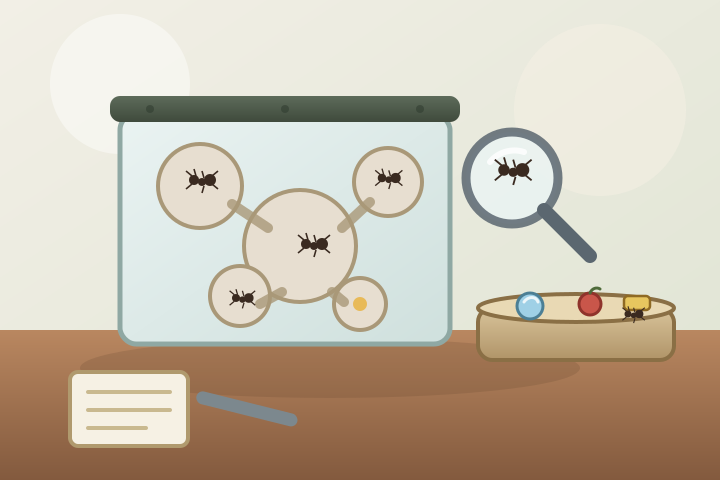
Ant keeping suits people who like close observation, small living systems, and watching slow processes unfold. A formicarium — a purpose-built habitat for ants — turns a colony into something you can study daily: how workers forage, how the queen lays, how brood is carried between chambers, and how the colony responds to food, temperature, and humidity.
It is a good fit if you are patient, comfortable with a hobby where progress is measured in weeks and seasons rather than days, and happy to keep notes. It is less ideal if you want a pet that interacts with you on demand, or if you cannot commit to a steady feeding and humidity routine. Ants do not bond with you, but a well-kept colony rewards you with constant, quiet activity.
Ant keeping is also one of the few animal hobbies that works in a small apartment: a test-tube colony or compact formicarium fits on a shelf, needs no outdoor space, and produces no smell when kept clean. It is a natural first step for children who are curious about insects, with adults handling the setup, feeding, and any collection of wild queens.
Beginner Fit Snapshot
| Fit question | Practical answer |
|---|---|
| Best first route | A small test-tube or gel formicarium with a foraging tray, started with a single queen or a small established colony from a reputable breeder. |
| Avoid for now if | You cannot keep a steady feeding and humidity routine, want a pet that responds to you, or plan to leave the setup unattended for long trips without arranging care. |
| Realistic startup cost | About $15-$50 for a test-tube or gel setup; $60-$180 for a proper glass or plaster formicarium with a foraging tray and tools. |
| Weekly time | Usually 30-60 minutes for feeding, water, humidity checks, cleaning the foraging area, and observation notes. |
| Space and weight | Very small: a test-tube colony needs a few centimetres of shelf; a full formicarium with tray fits on a desk or shelf, typically under 10 kg. Keep it out of direct sun and away from heating vents. |
| Best beginner species | Common, hardy, well-documented species such as the black garden ant (Lasius niger) in Europe or common harvester and carpenter ants in North America; check what local keepers recommend. |
| Main responsibility | Keeping humidity, temperature, and food appropriate for the species, and not disturbing the colony more than necessary. |
Getting Started
Start by choosing a species before buying anything, because the species determines the setup. Some ants need a dry, sandy nest; others need a humid one. Some forage actively and need a connected foraging area; others stay almost entirely in the nest. A few popular species, such as the barbarous harvester ant (Messor barbarus), need a cold hibernation period each year, and skipping it can kill the colony.
The core of ant keeping is the formicarium: a nest the ants can dig, build, or move through, plus a foraging area where food and water go. The simplest working setup is a sealed test tube with water and agar or gel as the nest, connected to a shallow plastic tray for foraging. More elaborate setups use glass tanks, plaster or cement blocks, resin casts, or 3D-printed chambers. Bigger is not better for a first colony: a small, stable, easy-to-clean setup beats a large one you cannot maintain.
Get your ants from a reputable captive breeder or a local ant-keeping community. Collecting a single wild queen from an abundant local population is a common and acceptable practice in many places, but it should be done gently, in season, and only from species and populations where a single queen makes no difference. Never collect large numbers, and never move ants across regions — introducing non-native ants into the wild is an ecological hazard and is restricted or illegal in many places.
Key Terms
A few words do most of the work in this hobby:
- Formicarium — the ant’s home: any purpose-built nest, from a test tube to a glass tank with tunnels or a plaster block.
- Foraging area (tray) — the connected space where ants leave the nest to find food and water.
- Queen — the reproductive female who founds the colony. Most beginner colonies start from one queen; a few species are polygyne (multiple queens).
- Workers — the sterile females that forage, feed the brood, and maintain the nest. A young colony may have only a handful.
- Brood — the eggs, larvae, and pupae of the colony. Seeing brood is the main sign that a queen is healthy and the conditions suit her.
- Agar — a gel made from agar powder and water (often with a little sugar) that serves as both food and a humidity source in test-tube setups.
- Humidity — the moisture level in the nest. Most species need a specific range; too dry and brood dies, too wet and mould appears.
- Hibernation (diapause) — a cold, dormant period some species require each year, usually a few weeks at roughly 4-10 °C.
- Casting — making a custom formicarium by pouring resin, plaster, or concrete around a tunnel template.
- Captive-bred — ants raised by a breeder rather than collected from the wild; usually the safest and most ethical starting point.
Starter Setup Paths
| Path | Good for | Beginner notes |
|---|---|---|
| Test tube with agar or gel | Most beginners, especially with a single queen or tiny colony. | Cheap, simple, and easy to clean. The colony outgrows it in months, so plan an upgrade. |
| Gel formicarium | People who want a ready-made, low-maintenance nest. | Pre-made gel blocks are convenient, but check the species’ humidity needs match the product. |
| Glass tank with tunnels or chambers | People who want to watch foraging and nest life side by side. | Connect a nest section to a foraging tray; seal it well and control humidity with a damp sponge or substrate. |
| Plaster, cement, or resin cast | People who enjoy making the setup as much as keeping the ants. | Casting is a project in itself; cure and dry the material fully before adding ants, and avoid fragrances or dyes. |
| 3D-printed formicarium | People with access to a printer who want custom chamber layouts. | Use a safe, fully cured filament and clean print; check that no supports or dust remain in the nest. |
Basic Gear
Essential:
- A formicarium suited to your species (test tube, gel block, glass tank, or cast).
- A foraging tray or area connected to the nest, with a lid or barrier so ants cannot escape.
- A way to control humidity: damp cotton, sponge, or substrate, plus a way to add water without flooding.
- Food matched to the species: sugar water or honey for most ants, plus small insects (fruit flies, mealworms, crickets) for carnivorous species.
- A fine pipette or dropper for water and sugar water.
- A toothpick or fine brush for placing and removing food.
- A notebook for observations, or a phone camera with a macro mode.
Optional at first:
- A magnifying glass or hand lens for close observation.
- A small thermometer and hygrometer near the setup.
- A spare test tube or chamber for moving a growing colony.
- A light source for photography.
First Session
Use the first session to set up rather than to watch. Choose the species, confirm its humidity, temperature, and hibernation needs, and build or assemble the formicarium accordingly. If you are receiving a queen or small colony, prepare the nest before the ants arrive: seal the setup, set the humidity, let the temperature stabilise, and have food and water ready.
When the ants arrive, transfer them gently — most breeders ship queens in a small vial or test tube that can be connected to or placed in the nest without handling the ants directly. Give them a day or two without disturbance, then make your first observation: where the queen is, whether workers are moving, and whether the nest humidity looks right. Write down what you see. The useful result of this session is a stable environment and a baseline to compare against — not a full tour of the colony.
First Month
Days 1-7: Settle In
Keep disturbance to a minimum. Check daily that the setup is sealed, the humidity is in range, and the queen is alive and moving. Offer a small amount of sugar water and, for carnivorous species, one or two small insects. Remove uneaten food after a day or two so it does not rot or attract mould. Expect little visible activity at first: a new queen may not lay for a week or more, and a small colony is easy to miss without a hand lens.
Days 8-21: First Brood
If the queen is laying, you should start to see eggs and then larvae — tiny, pale, and carried between chambers by workers. This is the milestone that tells you the conditions are right. Keep feeding small and regular, top up water, and note the brood count roughly once a week. If there is no brood after three weeks, check temperature and humidity first, then look for species-specific advice from a local keeper or forum before assuming the worst.
Days 22-30: Establish the Routine
By the end of the first month, settle into a rhythm: a daily glance, a feeding and water routine a few times a week, a weekly humidity and mould check, and a short observation note after each visit. Clean the foraging tray of old food and debris. If the colony is growing quickly, plan the next nest size now rather than scrambling when the test tube fills.
Beginner Species Guidance
Choose a species by its care needs, not just its appearance. Hardiness and documentation matter more for a first colony.
| Beginner choice | Why people like it | Watch for |
|---|---|---|
| Black garden ant (Lasius niger, Europe) | Common, hardy, active foragers, well documented by European keepers. | Needs a moderate humidity and a foraging area; queens are easy to find in spring. |
| Barbarous harvester ant (Messor barbarus, Europe) | Large, photogenic, and a classic European keeper’s species. | Requires a dry nest and a proper cold hibernation each year; skip hibernation and the colony fails. |
| Carpenter ants (Camponotus spp., North America) | Large workers, impressive behaviour, widely kept. | Some species need higher humidity; a few are polygyne, which changes how you start a colony. |
| Harvester ants (Messor spp., North America) | Active foragers that store seeds, which is fun to watch. | Dry-nest species; needs a hibernation period and a foraging area with seed options. |
| Odorous house ant (Tapinoma sessile) | Tiny, easy to keep in a test tube, very hardy. | Small and fast; a good first species but less visually impressive. |
| Fire ants (Solenopsis spp.) | Active and social. | Some are aggressive and some are invasive species — check local rules before keeping or collecting. |
A concrete example: a first European setup for a Lasius niger queen. A sealed test tube with a small agar plug as the nest, connected to a shallow lidded tray with a damp sponge corner, sugar water, and the occasional fruit fly. Keep it at room temperature out of direct sun, feed small every few days, and expect the first brood within two to four weeks.
Maintenance Rhythm
| Task | Typical rhythm | Why it matters |
|---|---|---|
| Observe the colony | Daily, briefly | Early signs of a problem — a still queen, mould, a quiet nest — show up before the colony visibly declines. |
| Feed small portions | Every 2-4 days, species-dependent | Rotting food breeds mould and drowns small colonies; small regular portions keep the foraging area clean. |
| Refresh water or sugar water | Every 2-3 days | Stale water and sugary residue attract mould and mites. |
| Check humidity | Weekly at first, then regularly | Humidity drift is the most common cause of brood loss; adjust the damp sponge or substrate as needed. |
| Clean the foraging tray | Weekly or when dirty | Old food, dead ants, and debris accumulate quickly in a small tray. |
| Note observations | After each visit | Counts, brood milestones, and behaviour changes are how you learn what your colony needs. |
| Plan hibernation (if needed) | Once a year, in autumn for most species | Species that require diapause need a cold period of a few weeks; missing it can be fatal. |
Costs
Ant keeping is one of the cheaper animal hobbies. A test-tube setup costs little: a tube, agar or gel, a tray, and a pipette. The main first costs are a decent formicarium and foraging tray ($40-$120 for a good glass or cast setup), a thermometer and hygrometer, and food, which is modest.
Costs rise with custom casting (resin, plaster, or concrete plus tools), 3D-printed formicaria (filament and printer time), larger multi-chamber setups, and photography gear such as a macro lens. Some keepers build elaborate multi-room “ant cities,” and that path approaches the cost of a serious craft hobby.
Ongoing costs are small: sugar, occasional insects, agar, and the electricity of a heat mat or lamp if your species needs temperature control. The cheapest setup is not always the best one — a sealed, humidity-stable, easy-to-clean formicarium prevents most colony losses, and a colony lost to mould costs more to replace than a better tray would have.
Lower-cost routes exist: local ant-keeping groups often sell or lend used trays and tubes, breeders sometimes sell small established colonies for less than a full setup, and a careful test-tube start keeps the first purchase to a few dollars.
Space Needed
Ant keeping needs very little space: a shelf, a desk corner, or a windowsill out of direct sun. The setup should sit on a stable surface where it will not be knocked over, away from heating vents, radiators, and cold drafts, and somewhere you will actually look at it daily — a colony you never see is a colony you cannot care for.
You also need a little storage for food, spare tubes, tools, and notes, and a place to do water and cleaning tasks without flooding the setup. If you keep a species that hibernates, plan a cool, dark, stable spot for the winter months — a refrigerator shelf set to the right temperature is a common solution, but confirm the exact range for your species first.
Solo or Social
Ant keeping is usually a home-based solo hobby, but it has a strong community side. Local ant-keeping groups, forums, and social media communities are active and helpful with species identification, setup advice, and troubleshooting. Breeders often run small networks where keepers trade queens, share brood, and help each other through a failing colony.
The hobby also pairs well with others: nature walks and foraging feed into finding and understanding local species, photography and microscopy sharpen your observation, and 3D printing, casting, and woodworking feed directly into building better formicaria.
Common Mistakes
- Choosing a setup before a species, then discovering the humidity or temperature needs do not match.
- Overfeeding, so rotting food and mould take the colony.
- Letting the nest dry out or flood; both kill brood.
- Placing the setup in direct sun or on a hot or drafty surface.
- Disturbing the colony constantly, especially a new queen.
- Skipping the hibernation period for species that require it.
- Using fragrances, dyes, or uncured materials in the nest.
- Leaving the setup unsealed, so ants escape or mites and other pests move in.
- Collecting wild ants in large numbers, or moving non-native species between regions.
Safety / Accessibility
Ant keeping is a low-risk hobby, but a few points matter. Some species bite or sting, and a large foraging colony can become a nuisance if it escapes, so keep the setup sealed and clean the foraging area regularly. If you are allergic to stings, choose a gentle species and avoid handling ants directly.
Handle the setup with care when cleaning: unplug any heat mats or lamps before adding water, and lift trays rather than dragging them. If you cast your own formicaria, work in a ventilated space and wear a mask when mixing resins or plasters, and let materials cure fully before ants are added.
Accessibility adaptations are easy: the setup is small and light, feeding needs only a dropper and a toothpick, and observation works from a seated position with a hand lens or a phone camera. A shelf at a comfortable height makes daily checks effortless, and the routine is gentle enough for most mobility levels.
Where It Can Go
Ant keeping can lead toward ant photography and macro videography, microscopy of brood and mites, custom casting and 3D-printed formicaria, species breeding and rearing, ant ecology and conservation projects, or a broader interest in insect keeping such as beetles, stick insects, or bees. It also pairs naturally with foraging, nature journaling, and gardening, because all of them reward close observation of small living systems.
References
Last reviewed: 18 August 2026.
Background:
- Wikipedia: Formicarium for the main nest types — test tubes, gel, plaster, glass, and cast setups — and their trade-offs.
- Wikipedia: Ant for colony structure, castes, and the biology behind what you are watching.
Community resources (optional):
- AntsCanada for species-specific care sheets and a large forum of keepers.
- r/AntKeeping for setup photos, troubleshooting, and species questions.
Related Hobbies
Beekeeping, terrarium making, aquarium keeping, foraging, nature journaling, photography, 3D printing, resin art, and gardening all connect naturally with ant keeping.