Who It Suits
Dominoes suits people who enjoy patterns, gentle competition, and a game that leaves room for conversation. A few turns can feel straightforward, then a difficult choice makes you pause: keep a useful number, or get a heavy tile out of your hand?
It is easy to bring a set to a friend’s house or leave one within reach for an evening at the kitchen table. Luck matters, so enjoying the decisions as well as the result helps keep play relaxed.
Getting Started
Dominoes is a family of games. Start with two-player Block Dominoes, then try Draw once matching feels familiar. Agree on the variant before dealing; family rules often differ.
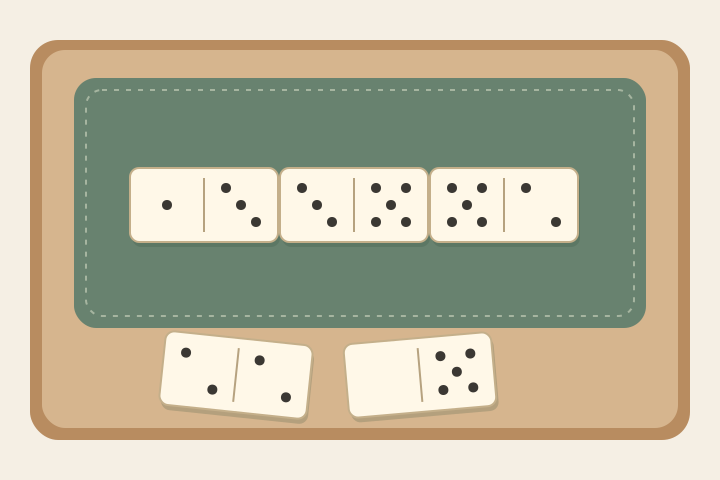
A double-six set has 28 tiles with zero to six dots, or pips, on each half. A double repeats a number; a blank means zero. Your hand is your private collection of tiles, and the boneyard holds the undealt ones.
Basic Gear
- A complete double-six domino set.
- A clear table where both players can reach the layout.
- A short rule sheet for your chosen game.
- Paper and a pencil if you want to keep scores.
- Optional tile racks and a soft mat for easier handling and quieter play.
First Session
Allow about twenty to thirty minutes to learn and play a few hands. Use this two-player Block game:
- Draw a tile each; the higher pip total leads. Redraw ties, return the tiles, and shuffle face down.
- Take seven tiles each. Leave the rest unused for this hand.
- The leader opens with any tile. Alternate placing one tile against a matching open end: a 3–5 can join a 3, leaving 5 exposed.
- Put doubles crosswise; they do not create extra branches. If you cannot play, pass without drawing.
- Finish when someone empties their hand or both players are unable to move. Fewest remaining pips wins; equal totals tie.
For these learning hands, simply note who won and alternate the lead. The Block rules explain full match scoring when you want it.
First Month
Play short, regular sessions with the same rules. In the first week, get comfortable checking both open ends before choosing a tile. Next, pause occasionally to compare two possible moves and discuss what each would leave in your hand. Try a hand with tiles visible if a friend is learning alongside you.
Later, try Draw Dominoes. One common version makes you draw when you cannot match, continuing until you can play or the boneyard is empty; then pass if still stuck. Other versions leave two tiles undrawn or allow different drawing choices. Choose one complete rule set from the Draw guide and agree on it before starting.
Costs
Borrowing a set lets you try the hobby without buying anything. A plain, readable set is enough; decorative materials, presentation boxes, and larger sets are optional. Check second-hand sets for all 28 distinct tiles before using them. A rack or mat can be a useful later purchase if it improves comfort.
Space Needed
A small table usually provides enough room for two hands and a winding line of tiles. Leave space to extend the chain without disturbing drinks or other pieces. The set packs into a small box, making storage straightforward.
Solo or Social
The starter game needs two people. On your own, you can practise counting pips, examine sample hands, or use a computer opponent. With friends, choose a variant designed for your group size rather than assuming the two-player deal applies. A regular partner makes it easy to establish a comfortable pace.
Common Mistakes
- Mixing rules from several variants in the same session.
- Choosing a move before looking at both ends of the chain.
- Confusing the number of tiles left with their total pip count.
- Buying a large or decorative set before checking whether its markings are easy to read.
- Rushing a beginner who needs time to count or compare moves.
Safety / Accessibility
Large tiles with clear, contrasting pips can make the layout easier to follow. Racks reduce the need to balance tiles upright, and a soft mat helps limit clattering. Use good lighting, allow unhurried turns, and say the open numbers aloud if that helps your partner. Keep small tiles away from young children and pets.
Where It Can Go
Dominoes can become a familiar family ritual, a café game with a friend, or a deeper interest in tile-game strategy. The wider family includes partnership games, All Fives, and train games, each with its own rules. You can explore a new variant together or stay with the one your table enjoys most.
References
Last reviewed: 23 September 2026.
Rules and further learning:
- Pagat: Block Dominoes for the starter game’s dealing, matching, passing, and scoring rules.
- Pagat: Draw Dominoes for drawing rules and regional variations.
- Pagat: Domino Games for set types and a directory of games to explore.
Related Hobbies
Board games, backgammon, chess, mahjong, and jigsaw puzzles offer other ways to enjoy patterns, patient choices, and time around a table.