Who It Suits
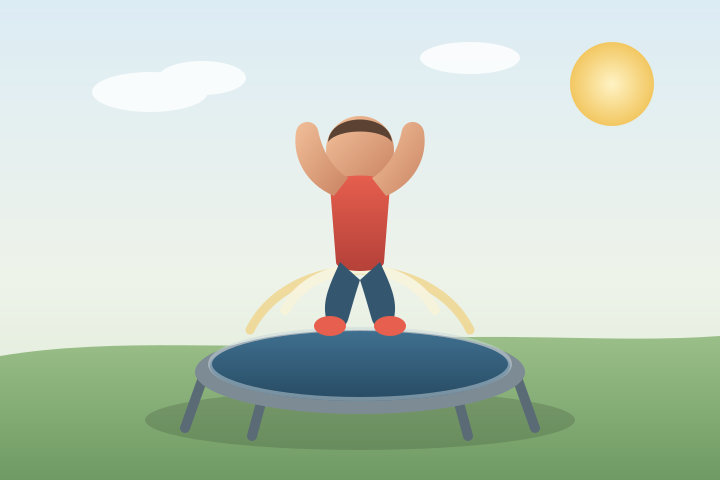
Trampolining means bouncing on a trampoline — a stretched fabric bed on a spring or elastic frame — for exercise, play, or skill. A beginner’s first session is usually simple: hop on, bounce gently in the centre, land with soft knees, and practise getting up and down safely. The appeal is real: it is one of the most immediately fun ways to move, it is a genuinely good cardio workout, and the same basic bounce is the foundation of a deep skill tree — gymnastics, tumbling, and competitive trampoline all start from it. The constraints are real too: a safe trampoline is a noticeable purchase, it needs a clear outdoor area with room above and around it, and the safest rule of the hobby is one person on at a time.
This page covers recreational trampolining — casual bouncing, fitness, and learning basic skills. Competitive trampoline gymnastics has its own rules, apparatus, and pathways, governed internationally by the International Gymnastics Federation (FIG).
Decision Snapshot
| Beginner question | Practical answer |
|---|---|
| Best for | People who want a fun, low-barrier workout with a real skill progression and a friendly club and park scene. |
| May dislike it if | You need a quiet indoor activity, lack outdoor space, or want to start without any equipment cost. |
| Typical first-session cost | A trampoline park day pass is typically $20–$40 / £15–£30; owning a starter trampoline is a few hundred dollars or pounds. |
| Weekly time commitment | Ten to twenty minutes a few times a week builds confidence and basic skills. |
| Space requirement | A level outdoor area with clear space around and above the trampoline; a garden, park, or community space. |
| Own or rent? | Try a trampoline park or club first; buy a trampoline once you know you will keep bouncing. |
| Fitness demand | Moderate: bouncing is a full-body, joint-friendly cardio workout that scales from gentle to intense. |
| Social level | Moderate: one person at a time on a trampoline, but parks, clubs, and gymnastics groups add company. |
Getting Started
The cheapest first step is to try before you buy. Trampoline parks and trampoline gyms let you bounce on proper equipment for a day pass, and gymnastics clubs often run beginner trampoline classes. If you decide to buy, the basics matter more than size:
- A round trampoline is the standard recreational choice; an 8 ft (about 2.4 m) round is a sensible starter size for one person.
- A safety enclosure net (the padded cage) and a safety pad over the frame and springs are essential, not optional.
- The trampoline should be anchored to the ground with the supplied kit, on level ground, away from trees, fences, walls, and overhead wires.
- Check the manufacturer’s weight limit and age guidance, and follow the assembly instructions exactly.
Where to learn:
- A trampoline park or trampoline gym is the fastest way to bounce safely and see what the hobby feels like.
- Gymnastics clubs and community colleges run beginner trampoline classes with mats and coaching; this is the best route if you want to learn skills like flips and twists.
- Free video tutorials are good for seeing soft-landing technique; a coach is better for correcting it.
- British Gymnastics and national gymnastics bodies list local clubs and beginner programs in the UK and elsewhere.
Basic Gear
| Item | Essential starter | Optional later | Avoid at first |
|---|---|---|---|
| Trampoline | A round recreational trampoline with a safety enclosure net and frame pad, sized for your space. | A larger or rectangular trampoline, or a competition-style bed. | A trampoline with no net or pad, or one that is clearly too small for the user. |
| Anchor kit | The manufacturer’s ground anchors, used from day one. | Extra anchors for windy areas. | Leaving the trampoline unanchored in an exposed spot. |
| Footwear | Bare feet or clean, soft-soled shoes for grip. | — | Sneakers with hard soles or outdoor boots on the mat. |
| Clothing | Comfortable clothes that do not snag on the net. | Gymnastics wear for club work. | Loose scarves, lanyards, or jewellery that could catch. |
| Instruction | A park pass or a beginner class for the first skills. | Ongoing coaching for flips and twists. | Learning aerial tricks alone without mats or a coach. |
| Maintenance | A brush or soft broom for the mat, and periodic checks of springs, pad, and anchors. | A replacement mat or pad as they wear. | Ignoring a torn mat, worn springs, or a loose anchor. |
Key Terms
A small vocabulary covers most of what you will meet in parks, clubs, and gymnastics:
| Term | Plain-English meaning |
|---|---|
| Bounce | One cycle of leaving the mat and landing back on it. |
| Soft landing | Landing with knees bent and feet flat, absorbing the impact through the legs rather than the joints. The single most important beginner skill. |
| Centre | The middle of the bed, where you bounce to stay on the trampoline. |
| Seat drop | Landing on your seat with knees up, a basic control skill. |
| Back drop | Landing on your back with knees up, usually onto a mat. |
| Tuck | Pulling the knees to the chest in the air, the body position for basic flips. |
| Pike | Bending at the hips with straight legs, the body position for pike flips. |
| Full | A 360° twist in the air. |
| Enclosure | The padded net cage around a recreational trampoline. |
| Safety pad | The padded cover over the frame and springs. |
| Anchor | The kit that ties the trampoline to the ground. |
| Trampoline park | An indoor facility with many trampolines, foam pits, and coached sessions. |
| Trampoline gymnastics | The competitive discipline of performing judged routines on a competition trampoline. |
| Tumbling | A gymnastics discipline of acrobatic skills on a sprung floor or track, closely related to trampoline skills. |
First Session
Use the first session to build feel and safe habits, not tricks. On your own trampoline or in a park:
- Get on and off safely first: step onto the frame, not the net, and hold the enclosure when you are near the edge.
- Bounce gently in the centre, keeping your knees slightly bent and your eyes forward.
- Practise the soft landing: land with knees bent, feet flat, and a quiet, controlled touch-down.
- Practise stopping: bounce, then land and stay still, then sit down and step off.
- Keep it to ten to twenty minutes. Stop while it is still fun and while your landings are still soft.
One person on the trampoline at a time, every time.
First Month
Build in short, regular sessions. A simple progression:
| Week | Session focus | Practice drills | Success target | Watch for |
|---|---|---|---|---|
| Week 1 | Safe bouncing and soft landings. | Gentle centre bounces, controlled stops, getting on and off. | Ten quiet, soft landings in a row. | Stiff legs, bouncing toward the edge, rushing. |
| Week 2 | Control. | Seat drops, small controlled bounces, changing height. | A repeatable seat drop with a soft landing. | Landing off-centre; losing balance on the drop. |
| Week 3 | Body positions. | Tuck and pike positions on the mat or with a coach. | Holding a tuck and pike in a bounce. | Rounding the back; rushing into flips. |
| Week 4 | First skills, with coaching. | A coach-supervised skill such as a back drop or a small flip onto a mat. | One new skill landed safely with a coach present. | Attempting aerial tricks alone or without mats. |
Costs
Trampolining is cheap to try and expensive to own. As of mid-2026, typical starter ranges are:
| Item | Typical range | Note |
|---|---|---|
| Trampoline park day pass | $20–$40 / £15–£30 | The cheapest honest way to try the hobby. |
| 8 ft round trampoline with net and pad | $300–$700 / £250–£500 | A sensible starter trampoline for one person. |
| Larger or rectangular trampoline | $600–$2,000+ / £500–£1,500+ | More space, more cost; rectangular models suit multiple users less safely. |
| Anchor kit | $20–$60 / £15–£45 | Often included; replace if missing. |
| Replacement mat or pad | $50–$200 / £40–£150 | Mats and pads wear out over a few years. |
| Beginner classes or coaching | Varies by venue | A few sessions early save months of bad habits. |
Prices vary a lot by country, retailer, and exchange rates, so check local shops for current costs. The cheapest honest path is a park pass or a club class until you know you will keep bouncing.
Space Needed
Trampolining needs a level outdoor area with clear space around and above the trampoline. A garden, backyard, park, or community space all work. Before placing a trampoline, check for overhead branches, wires, and fences, and keep a clear zone around the frame so a bounce toward the edge does not end in a wall or a tree. The trampoline should sit on level, drained ground — not on a slope or a spot that floods — and be anchored. Storage is easy: the mat, pad, and net can be lifted off the frame in a season of bad weather.
If you do not have outdoor space, trampoline parks and gymnastics clubs are the practical alternative.
Solo or Social
A trampoline is safest with one person on at a time, so most home bouncing is solo. The social side comes from trampoline parks, trampoline gyms, gymnastics clubs, and community classes, where you bounce alongside others, take coached sessions, and share the foam pits and skill walls. Parks are also one of the more family-friendly activities: children and adults can take turns, and many parks run kids’ classes and adult fitness sessions. Competitive trampoline and tumbling clubs add a structured community with training groups, competitions, and a clear progression.
Common Mistakes
- Bouncing with stiff legs instead of landing softly through the knees.
- Bouncing too high or too close to the edge before control is solid.
- Having more than one person on the trampoline at a time.
- Skipping the enclosure net, the safety pad, or the ground anchors.
- Learning flips and twists alone, without mats or a coach.
- Placing the trampoline under branches, near walls, or on uneven ground.
- Ignoring wear: a torn mat, worn springs, or a loose anchor should be fixed before the next session.
- Buying a bigger trampoline instead of practising the basics on the one you have.
Safety / Accessibility
Falls and collisions are the main risks in trampolining, and most injuries come from landing badly, bouncing near the edge, or sharing the trampoline. The WHO notes that regular physical activity provides significant physical and mental health benefits, and trampoline bouncing is a genuinely effective way to get it — the safety habits are what keep it that way.
- One person on the trampoline at a time, every time.
- Use the enclosure net and the safety pad, and anchor the trampoline to the ground.
- Land softly: knees bent, feet flat, eyes forward.
- Bounce in the centre and keep a clear zone around the trampoline.
- Learn aerial skills only with mats and a qualified coach.
- For children, choose a trampoline sized for the child, keep an adult nearby, and follow the manufacturer’s age and weight guidance.
- Check the mat, springs, pad, and anchors regularly, and repair or replace worn parts.
Accessibility options are good: bouncing scales from gentle to intense, so it suits a wide range of fitness levels and ages; seated bouncing and adapted trampoline programs exist for people with mobility differences; trampoline parks often run inclusive and adaptive sessions; and the joint-friendly nature of bouncing makes it a good option where running is hard on the body. Ask local gymnastics clubs about adaptive or beginner-friendly sessions.
Where It Can Go
Trampolining can stay a casual habit or become a long-term sport. The main changes are the equipment, the coaching, and how much structure you add.
| Path | What changes | Notes |
|---|---|---|
| Casual fitness | Relaxed home or park sessions, soft landings, basic control. | The cheapest and most sustainable version. |
| Trampoline park regular | Frequent park visits, foam pits, skill walls, group classes. | Good social structure without buying equipment. |
| Gymnastics club | Coaching, mats, and a structured progression of skills. | The natural next step for learning flips and twists. |
| Tumbling | A sprung floor or track, and acrobatic skills. | Closely related to trampoline; often taught by the same coaches. |
| Competitive trampoline | A competition bed, judged routines, and national federation rules. | FIG governs the discipline; national bodies run entry-level competitions and coaching pathways. |
| Coaching | Training and certification, then teaching others. | Gymnastics bodies run coach education pathways. |
References
Last reviewed: 18 August 2026.
Editorial note: This page is written as beginner discovery guidance, not as a maintained product ranking. Prices are typical starter ranges and vary by country, retailer, and exchange rates; check local shops for current costs. Always follow the manufacturer’s assembly, weight, and age guidance for your trampoline.
Official and institutional sources:
- World Health Organization: Physical activity — fact sheet on the physical and mental health benefits of regular physical activity.
- International Gymnastics Federation (FIG) — the international governing body for gymnastics, including trampoline gymnastics; publishes the competition rules and code of points.
- British Gymnastics: Trampoline technical resources — current UK competition handbooks, judging pathways, and technical requirements.
- Wikipedia, Trampoline gymnastics — the history of the discipline, its Olympic status, and how routines are judged.
Community resources (optional):
- Trampoline parks and trampoline gyms for coached sessions, foam pits, and group classes.
- Local gymnastics clubs for structured skill progression and a community.
Related Hobbies
Gymnastics, tumbling, and parkour share the body-control and aerial-skill base; yoga, pilates, and dance complement it with balance and core work; running, cycling, and swimming pair well as cardio partners; slacklining and rock climbing connect through balance and confidence in the air.