The Short Version
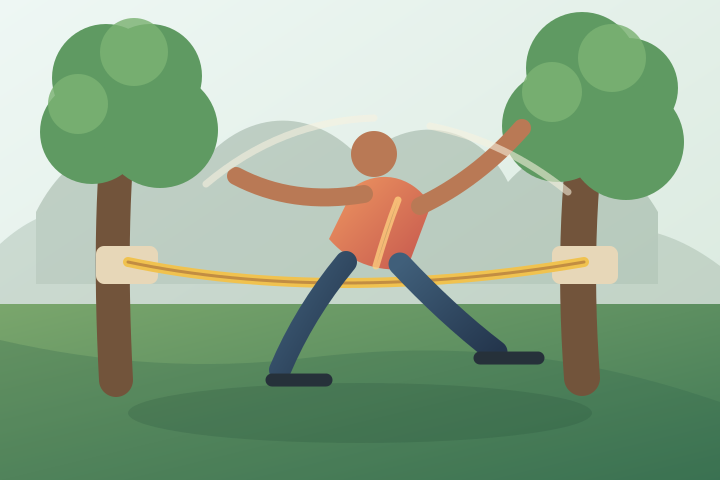
Slacklining is balancing on a strip of webbing 2 to 5 centimetres wide made of synthetic fibre, rigged between two fixed points — usually two trees in a park. Unlike a tightrope, the line is deliberately kept slack: the webbing stretches and moves under your weight, so you are constantly correcting your balance rather than holding a static line still. A beginner’s first session is a short, low line over soft ground: mounting, standing, stepping, and getting off under control. The appeal is that it is cheap, portable, and learnable by almost anyone; the constraints are that you need two safe anchors and permission to use them, and rigging must be learned properly before the line gets longer, tauter, or higher.
This page covers low “novice” slacklines — the kind you can safely start with. Tricklines, longlines, waterlines, and especially highlines are separate disciplines with their own training, gear, and risk profiles.
Beginner Fit at a Glance
| Fit question | Practical answer |
|---|---|
| Best first step | A coached session, or learning safe rigging from an experienced slackliner or the ISA Basics Flyer before stepping on your own line. |
| Typical first cost | A basic kit (webbing, ratchet, tree slings, tree protectors) — usually a few tens of dollars or pounds; varies by region and retailer. |
| Time per session | 30–60 minutes. |
| Weekly commitment | Once or twice a week is enough to learn. |
| Space requirement | Two healthy anchors with a clear landing area; parks, gardens, and campgrounds. |
| Difficulty | Moderate. Balance improves quickly with practice; technique matters more than strength. |
| Fitness level | Low to moderate to start. |
| Social level | Medium to high. Solo once you can rig safely, but partners make learning faster. |
| Good fit if | You like balance work, outdoor sessions, focused repetition, and small measurable wins. |
| Bad fit if | You want to start immediately without learning rigging, or you have no access to safe anchors. |
Who It Suits
Slacklining suits people who enjoy balance practice, outdoor sessions, focused repetition, and small measurable wins. It can stay simple with a low park line and walking drills, or develop into tricks, longlines, rodeolines, waterlines, highlines, fitness training, and community meetups.
According to the International Slackline Association, slacklining emerged as an independent activity in the early 1980s from the climbing scene in Yosemite National Park, where climbers began balancing on the webbing from their own gear; it spread through the climbing scene and then worldwide, and really took off around 2006 in Europe when simple kits made it easy for anyone to set up a line. Beyond recreation, slacklines are used as a balance training aid in competitive sports, as fitness equipment, and in physiotherapy, and the activity has a growing place in school sports, tourism, and public slackline parks.
Types of Slackline
| Type | Setup | What a beginner does | Notes |
|---|---|---|---|
| Novice slackline | Short, low line, 2–5 cm webbing | Walk, balance, turn | The standard starting point; no special sense of balance is needed. |
| Rodeoline | Anchored 2–3 m high, sags almost to the ground | Swing in the middle, practise acrobatics | Cannot be walked end to end; similar to a circus slackrope; good for training and shows. |
| Trickline | 15–30 m, very taut | Later: jumps, flips, spins | Trampoline-like webbing; a competitive discipline with world championships. |
| Longline | 30 m or more | Later: walking long distances | Concentration is the main challenge; the world record is over 600 m. |
| Speedline | Short taut line | Later: run across as fast as possible | Contests since 2008; a typical contest length is 14.5 m. |
| Waterline | Over a body of water | Later: walk over water | The water must be deep enough all the way along the line; moving water makes it harder. |
| Highline | Great heights, between rocks or peaks | Not for beginners | Requires a harness, a redundant backup system, and formal training. |
Key Terms
Park and group conversations use a small vocabulary. In plain English:
| Term | Plain-English meaning |
|---|---|
| Webbing | A flat strip of synthetic fibre, 2–5 cm wide — not a rope; it stretches under load. |
| Slackline | A line kept deliberately slack; the dynamic movement is the point. |
| Tension | How taut the line is. Beginner lines stay low and relatively slack. |
| Sag | The dip in the line under load. |
| Anchor | A fixed point — tree, post, or rock — that the line is tied to. |
| Tree sling | A loop of webbing that wraps around a tree to spread the load. |
| Tree protector | Padding between the sling and the bark to protect the tree. |
| Ratchet | A hand-cranked tensioner that pulls the webbing taut. |
| Mount | Getting onto the line. |
| Dismount | Getting off the line under control. |
| Cross | Walking from one end of the line to the other. |
| Helper line | A second line or strap held by a partner for support. |
| Backup line | A second safety system (rope or webbing) used on highlines. |
| Buddy check | A partner’s inspection of the rigging before anyone steps on. |
| Rigging | Setting up and taking down the line safely. |
| Highline | A line rigged at height with a full safety system. |
Getting Started
The best first step is learning the setup — not buying equipment.
Step 1: Learn Safe Rigging Before You Step On
Take a coached session, learn from a friend who already knows safe setup, or work through the ISA Basics Flyer. You need to know how to choose strong anchor points, protect trees, keep the line low, tension the webbing correctly, and inspect the system before stepping on.
Step 2: Find a Spot and Get Permission
You need two healthy anchors with enough room between them and a clear landing area. Parks, gardens, campgrounds, and organised slackline areas can work if local rules allow it. Check with the landowner or park authority where permission is required, and avoid fragile trees, paths with foot traffic, playgrounds, roads, steep slopes, and wet roots.
Step 3: Rig a Short, Low Line
Set a short line low over grass, roughly knee height or lower, with clear fall space on both sides. Inspect the webbing for cuts or fraying, check the knots and ratchet, and have a partner buddy-check the setup.
Step 4: Do Your First Practice
See the First Session section below. Early progress is about relaxed posture and repeatable mounts, not crossing a long line immediately.
Step 5: Find a Local Group
The International Slackline Association maintains a directory of local groups and a map of lines and spots (Slackmap). Meetups are useful for learning etiquette, safer rigging habits, and getting feedback on your balance.
Basic Gear
Buy only what a low line needs, and delay the rest until a real limitation shows up.
| Item | First visit | When to buy | Skip for now |
|---|---|---|---|
| Webbing (2–5 cm) | Included in a beginner kit. | A basic kit is enough for park practice. | Longline or highline webbing. |
| Ratchet or pulley tensioner | Included in a beginner kit. | Upgrade when the ratchet feels limiting. | Highline-rated gear before training. |
| Tree slings and tree protectors | Essential for rigging between trees. | Replace when worn. | Rigging on trees without protectors. |
| Flat shoes or bare feet | Flat shoes with thin soles, or bare feet where safe. | — | — |
| Helper line | Optional for first attempts. | — | — |
| Ground cover | Soft grass, or a mat you bring. | — | — |
| Backup line, harness, leash | Not needed for low lines. | Only with formal highline training. | Any highline gear before instruction. |
| Bag and water bottle | Bring one. | — | — |
First Session
A realistic first visit:
- Set a short line low over grass, roughly knee height or lower, with clear fall space on both sides.
- Before stepping on: inspect the webbing and ratchet, and have a partner buddy-check the rigging.
- Practise standing on one foot, stepping down under control, looking at a fixed point ahead, keeping arms loose, and breathing steadily.
- Take turns if you are with others so fatigue does not turn balance practice into sloppy falls.
- The goal of the first session is a complete, uneventful visit — not a personal best.
First Month
| Stage | Time block | What to do | Readiness checkpoint |
|---|---|---|---|
| Week 1: mount and stand | 1–2 sessions | Mount from both sides, stand for longer counts, controlled dismounts. | You can mount, stand, and get off without thinking. |
| Week 2: steps and turns | 1–2 sessions | Walk one or two steps, turn around, try sitting starts. | A few steps and a turn feel calm. |
| Week 3: cross the line | 1–2 sessions | Cross the short line; use a helper line for confidence if needed. | You can cross the short line on most attempts. |
| Week 4: mix and get feedback | 1–2 sessions | Lengthen the line or raise tension only after the basic walk feels calm; ask a local group for feedback. | You know which direction you want to go — trickline, longline, or rodeoline. |
Practise short sessions once or twice a week. Keep a short note for each session: what you did, what felt hard, and one thing to work on next time.
Costs
Slacklining has a low to moderate setup cost. A beginner kit with webbing, a ratchet, tree slings, and tree protectors is usually a few tens of dollars or pounds — one of the cheapest entries into a movement hobby — though prices vary by region and retailer, so check current prices before buying. Costs rise with longer webbing, better tensioning systems, backup lines, anchors, classes, travel, trickline gear, or specialised highline equipment, which is a separate and much larger investment. A lower-cost first step is a coached session or borrowing a local group’s line before buying your own kit.
Space Needed
Slacklining needs two safe anchors with enough room between them and a clear landing area. Parks, gardens, climbing gyms, campgrounds, and organised slackline areas can work if local rules allow it. Avoid fragile trees, paths with foot traffic, playgrounds, roads, steep slopes, wet roots, and any anchor you are not allowed to use.
Solo or Social
Slacklining can be a quiet solo practice once you understand setup, but it is often social. Friends can help check anchors, coach posture, share drills, spot early attempts, and make repeated falls less frustrating. The International Slackline Association maintains a directory of local groups and a map of lines and spots (Slackmap), and meetups are useful for learning etiquette and safer rigging habits.
Common Mistakes
- Rigging a line before learning safe setup from instruction or an experienced slackliner.
- Setting the line too high or too long at the start.
- Using trees without protection.
- Ignoring local rules or permission for the spot.
- Not inspecting the webbing and ratchet before stepping on.
- Overtensioning gear without understanding its limits.
- Looking down at the line instead of at a fixed point ahead.
- Locking the knees and fighting every wobble.
- Practising over hard, cluttered, or sloped ground.
Safety / Accessibility
Falls, ankle rolls, bruises, wrist injuries, gear misuse, and anchor damage are the main concerns. Keep beginner lines low, use tree protection, inspect webbing and ratchets, keep bystanders clear, and learn rigging from reliable instruction before using longer or higher setups.
Safety Decision Guide
| Decision point | Beginner rule |
|---|---|
| First line | Short, low (knee height or lower), over soft ground. |
| Anchors | Healthy, sturdy, protected, and permitted. |
| Before stepping on | Inspect webbing and ratchet; have a partner buddy-check. |
| On the line | Look at a fixed point ahead, keep knees loose, step down under control. |
| Bystanders | Keep them clear of the fall zone. |
| Weather | Wind and wet ground change how the line moves; stop if conditions are poor. |
| Progression | Longer or tauter only after the basics feel calm; highlines only with formal training, a harness, and a backup system. |
| Highlines | A separate discipline: never attempt without instruction, a redundant safety system, and appropriate anchors. |
For accessibility, short low lines, helper lines, seated starts, soft surfaces, and adaptive balance progressions can make the hobby more accessible. Slacklines are also used in physiotherapy and school sports, and indoor slacklining is possible where outdoor access is limited; the ISA publishes guidance for indoor and school sports use.
Where It Can Go
Slacklining can lead toward tricklining, longlining, highlining with proper training, waterlining, yoga, climbing, parkour, acrobatics, camping, outdoor photography, travel, coaching, or event volunteering. The International Slackline Association runs a World Cup series, a world ranking list, and certification programs for instructors, riggers, and judges for people who want to teach, rig, or compete.
References
Last reviewed: 18 August 2026.
Editorial note: This guide is written as beginner discovery guidance for low novice slacklines. Kit prices are broad ranges, not product rankings, and local rules override any general advice here. Highlines are a separate discipline with their own training, gear, and risk profile; this page does not cover highline rigging.
Official and institutional sources:
- International Slackline Association: What is Slacklining? for the history of the activity, the list of disciplines, and how slacklining differs from tightrope walking.
- ISA Publications for the Basics Flyer, Tree Protection, Public Space, Indoor and School Sports, and Highline safety documents, available in 15+ languages.
- ISA Basics Flyer for beginner setup and practice guidance.
- ISA Tree Protection for protecting trees when rigging between them.
- International Slackline Association for local groups, the Slackmap spot map, the World Cup series, and instructor and rigger certification.
Community resources (optional):
- Local slackline groups and meetups for local spots, partner matching, and rigging feedback.
- Climbing gyms and outdoor centres that run slackline sessions or classes.
Related Hobbies
Rock climbing, parkour, yoga, Pilates, hiking, camping, gymnastics, skateboarding, dance, and stand-up paddleboarding all sit nearby.