Who It Suits
Stand-up comedy is performing original material — jokes, stories, and observations — at a microphone in front of a live audience, usually in sets of five to ten minutes. As a beginner, most of your time is spent writing short bits, rehearsing them aloud, performing at open mics, and rewriting based on what the room actually did. The stage time is short; the writing and testing are the hobby.
It suits people who enjoy jokes, stories, observation, language, performance, or testing ideas in front of a room. It rewards curiosity, rewriting, resilience, and attention to audience response more than constant natural confidence. The honest constraints are that you have to be seen and heard, the feedback is public, and progress is uneven — a quiet room is a normal part of learning, not proof the idea is dead. Stand-up is as much a casual pastime as a profession: most people do it for the writing and the stage time, and the professional path (paid shows, tours, television) is competitive and a minority outcome.
Getting Started
The smallest sensible first step is to write three to five minutes of original material and find a beginner-friendly open mic. An open mic is a slot where anyone can sign up to perform, usually with a short time limit (often three to five minutes for newcomers); many are free or ask for a small fee, and the host keeps the order moving. Open mics are the standard entry point in most comedy scenes, and the usual ladder from there is open mic, then showcases (curated bills of booked comics, sometimes with an entry fee), then hosting (introducing other comics and keeping time), then paid shows.
If you want structure, comedy schools and clubs run stand-up classes and workshops. The Second City (Chicago, Toronto, and New York) and the Comedy Cellar (New York) both offer stand-up courses alongside their shows, and most cities have smaller clubs, community classes, and comedy writing groups. A few sessions will tell you whether you prefer writing alone or learning in a group.
Stand-up has distinct styles, and a few sets will show you which one fits: observational humour (everyday life and its oddities), storytelling (longer personal narratives), character work, and political or topical material. Beginners often start with observation and short personal stories because they are easy to write and easy to test.
Basic Gear
Essential:
- A notebook, notes app, or index cards for joke ideas and set notes.
- A phone or small recorder for reviewing sets.
- A timer.
- Water; your voice works hard at the mic.
- Comfortable clothes suitable for the venue.
- A local open mic, class, workshop, or writing group.
Optional at first:
- A microphone and small speaker for home practice.
- A phone camera for video review; timing and body language are easier to judge on screen than in memory.
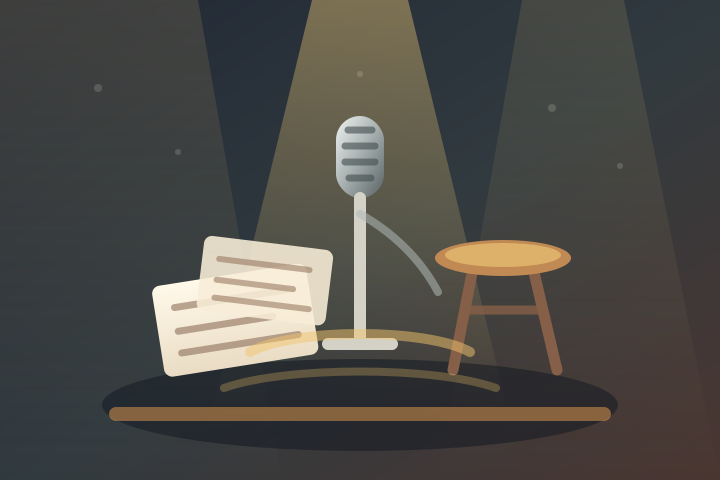
You do not need to buy a microphone or any stage equipment — venues provide the mic, the stool, and the light.
First Session
Prepare three to five minutes of original material, rehearse it aloud, and time it before you arrive. A workable first set is three to five short bits, each with a premise (the idea), a setup (the lines that build it), a punchline (the turn), and maybe a tag (a quick extra line that lands the same idea again).
At an open mic, arrive early, sign the sheet, and watch the comics before you: how they hold the mic, where they pause, and how the host hands time over. At the mic, hold the microphone close, pause after punchlines, respect the light (the cue to go on and off), and leave the stage when your time is done. Record the set if the venue allows it, then review what actually happened rather than what you feared happened.
First Month
Write regularly, perform whenever you can, and keep each set focused enough to learn from it. A realistic first-month sequence:
- Build a notebook of premises — observations, stories, and situations you could return to.
- Turn the strongest premises into short bits with a clear setup and punchline.
- Perform at least once a week if the local scene allows it, and note which premises, punchlines, tags, pauses, and story turns get a response.
- Rewrite between sets: cut what is flat, sharpen what works, and keep a button (a strong closing line or joke) for the end of the set.
- Watch live comedy with attention to rhythm, structure, point of view, callbacks (returning to an earlier joke for a bigger laugh), and how comics recover when a joke misses.
A few terms do most of the work:
- Premise — the underlying idea or observation a joke is built on.
- Setup — the lines that establish the premise before the turn.
- Punchline — the turn that delivers the joke.
- Tag — a quick follow-up line that extends the same joke.
- Callback — a return to an earlier joke or detail, usually for a bigger payoff.
- Button — the final line or joke that closes a bit or a set.
- Bit — one piece of material, from a single joke to a two-minute story.
- Set — the run of bits you perform, usually five to ten minutes.
- Open mic — a slot where anyone can sign up to perform.
- Showcase — a curated bill of booked comics, often with an entry fee.
- Hosting — introducing comics, keeping time, and keeping the show moving.
- Workshopping — testing material in front of an audience and rewriting it based on the response.
Costs
Stand-up can begin for free or nearly free: writing costs nothing, and many open mics are free or ask for a small fee. Fees vary by city and venue, so check local listings before budgeting.
Costs rise only if you move further in: showcase entry fees, classes and workshops, coaching, transport, recordings, festival submissions, tickets, and travel to a bigger comedy scene. Treat those as a separate investment to make once you know you want to keep going, not a prerequisite for enjoying the hobby.
Space Needed
Writing needs almost no space. Practice needs enough room to stand, speak aloud, and time a set. Performing usually happens in comedy clubs, bars, cafes, theatres, community rooms, bookstores, campuses, or small stages with a microphone and audience seating.
Solo or Social
Stand-up starts as solo writing and rehearsal, but it becomes social through open mics, audience feedback, hosts, bookers, other comics, writing groups, classes, and shows. Most progress comes from balancing private rewriting with repeated live testing, which is why a recurring open mic or class matters more than any single performance.
Common Mistakes
- Waiting until a set feels perfect before trying an open mic.
- Speaking too fast and ignoring pauses.
- Copying another comic’s premise, structure, or wording.
- Treating silence as proof the idea has no value.
- Going over time.
- Arguing with the audience instead of learning from the room.
- Writing only punchlines without a clear point of view.
- Performing the same set everywhere without rewriting between shows.
Safety / Accessibility
Choose venues that feel physically safe and have clear expectations around harassment, heckling, recording, and audience interaction. Some open mics run in bars, where alcohol is served and the venue may have an age minimum; you do not have to drink to perform, and it is worth checking the venue’s age policy and house rules before you book. Protect your voice — hydrate, warm up, and do not push a tired or sore voice — and avoid pressuring yourself to share private material before you are ready.
Heckling and a quiet room are part of the job, and a good host will manage the audience for you; if a venue’s culture feels hostile, it is a venue problem, not a comedy problem, and you are allowed to leave. Leave room for different access needs: seated sets work, and mic height, lighting, seating, travel, and mic handling can all be adapted — check a venue’s accessibility details before you commit.
Where It Can Go
Casually, stand-up can stay exactly that: open mics, showcases, and the general sharpness of shaping ideas for an audience.
If you want to go further, the routes branch. Hosting, curated showcases, comedy festivals, sketch comedy, improv, acting, podcasting, comedy writing, public speaking, teaching, and online video are all common next steps. Festivals are the most visible step up: the Edinburgh Festival Fringe is open-access, meaning anyone can book a show, and the Just For Laughs festival in Montreal is one of the largest stand-up events in the world. The professional path — paid residencies, tours, television — is competitive, and most working comics build it slowly over years of open mics and showcases.
References
Last reviewed: 18 August 2026.
Schools and organisations:
- The Second City — comedy school and theatre in Chicago, Toronto, and New York; stand-up classes, drop-in classes, and a Comedy Studies program.
- The Comedy Cellar — New York comedy club that runs stand-up classes and a “New Joke Night” for new material.
- The Upright Citizens Brigade (New York), iO (Chicago), The Groundlings (Los Angeles), and Magnet Theatre (London) — other well-known comedy and improv schools, each running beginner-to-advanced training.
Festivals:
- Edinburgh Festival Fringe — open-access festival in August; anyone can book a show, and comedy is a major genre of the programme.
- Just For Laughs — Montreal stand-up festival and production company, one of the largest comedy events in the world.
Background:
- Wikipedia: Stand-up comedy for the history (vaudeville roots, the modern comedy club era) and the terminology used on this page.
Related Hobbies
Improv comedy, acting, creative writing, podcasting, magic tricks, video editing, journaling, comics, and DJing all connect with stand-up through timing, voice, performance, audience awareness, or writing.