Who It Suits
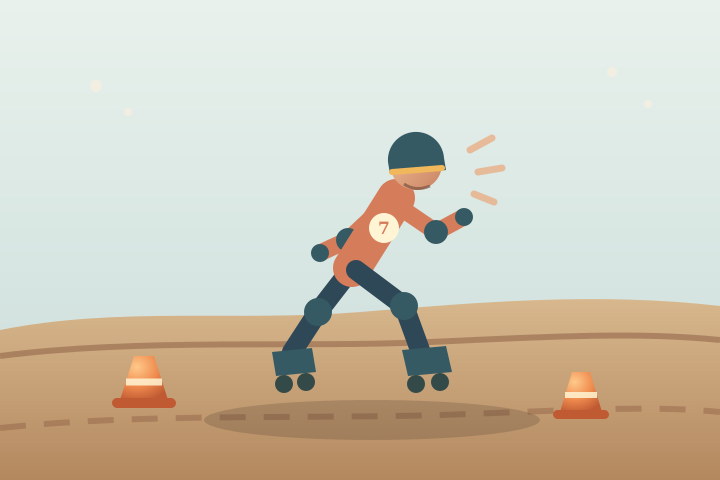
Roller derby is a full-contact team sport played on quad skates. Two teams share a track, and during each jam (a scoring period of up to two minutes) one skater from each team — the jammer — scores by lapping members of the opposing team, while the other skaters, the blockers, shield their own jammer and try to stop the other. A jammer earns one point for each opposing blocker lapped and three points for lapping the opposing pivot. The action happens around the pack, the largest cluster of blockers: blockers use legal, torso-to-torso blocking to set up the jammer, and anyone who drifts more than a body length ahead of or behind the pack is off-track and cannot be scored on or blocked until they re-enter.
A beginner’s first months are much smaller than a full game: most leagues run a learn-to-skate program where you build up from standing and stopping to fast, controlled skating, then learn blocking positions, jammer strategy, and the rules in layers. The appeal is real: it is a genuine team sport with a strong community, it builds serious leg strength, balance, and cardio, and progress is visible within a few weeks. The constraints are real too: it is a contact sport (you will be blocked and you will block), it needs a smooth indoor track and a league or group to practice with, and the rules take a while to absorb.
This page covers modern flat-track roller derby, the form played on an oval indoor track and governed by the World Flat Track Roller Derby Association (WFTDA). Banked-track roller derby, played on a steeply banked oval, has its own rules and is governed by Roller Derby International (RDI).
Getting Started
The first step is finding a local league. Roller derby is league-based rather than club-based: nearly every league runs a novice or learn-to-skate program that teaches skating fundamentals before you join a team, and most welcome complete beginners with no skating experience. Search for your city’s league or the WFTDA league directory, and check when the next beginner program starts — programs usually run for several weeks and then feed into a novice team.
Start with skates that fit: derby skates are quad skates with a high-cut boot that holds the ankle, and they should feel snug with your heel held in place. Borrow, rent, or buy used before buying new — many leagues lend starter skates or know where to find good used pairs, and used derby skates are often the best first purchase. If you already own quad skates in good condition, they can serve for the early weeks.
Learn to stop and fall before you learn to go fast. The plow stop, the cross-overs, and a controlled drop to one knee are the foundation of everything else, because derby skating is fast, close, and full of sudden changes of direction.
Basic Gear
| Item | Essential starter | Optional later | Avoid at first |
|---|---|---|---|
| Derby skates | A snug-fitting pair of quad skates with a high-cut boot; league-lender or used skates are fine to start. | New skates fitted to you, with wheels matched to your track surface. | Loose, too-big, or toy-grade skates. |
| Helmet | A certified skate or sports helmet that fits level and snug, worn at every session. | Replacing it after a hard impact. | A bicycle helmet that does not cover the back of the head, or no helmet. |
| Wrist guards | Wrist guards on every session — most falls land on outstretched hands. | Upgrading to padded or hinged guards. | Bare wrists while learning. |
| Knee and elbow pads | A basic set for the first months. | Replacing worn pads. | — |
| Mouthguard | A basic mouthguard for blocking practice and games. | A custom-fitted guard. | — |
| Socks | Comfortable socks that do not bunch up. | Thicker cushioned socks. | Bare feet or thin socks that slide. |
| Water | A bottle for every practice. | — | — |
Leagues usually publish a full gear checklist before your first blocking session; some provide or rent starter gear.
Key Terms
A small vocabulary covers most of what you will hear at practice and at the rink:
| Term | Plain-English meaning |
|---|---|
| Jam | A scoring period of up to two minutes, started and stopped by the referee. |
| Jammer | The skater who scores, marked by a star on the helmet; laps opponents to earn points. |
| Pivot | The first blocker to leave the pack, marked by a stripe on the helmet; can stop or restart a jam. |
| Blocker | A skater who protects the jammer and blocks opponents; the rest of the on-track team. |
| Pack | The largest cluster of blockers; play happens inside or at the edge of the pack. |
| Off-track | A skater more than a full body length ahead of or behind the pack; cannot be blocked or scored on until back in the pack. |
| Anchor | The first blocker of a team to leave the pack; may legally hit the opposing jammer to end the jam. |
| Legal block | A front-to-back, torso-to-torso block; no contact to the head, shoulders, elbows, knees, or below, and no tripping. |
| Penalty box | Where a skater serves 30 seconds for a minor penalty or two minutes for a major one. |
| Flat track | The modern oval indoor track with a flat surface; the form governed by WFTDA. |
| Banked track | A steeply banked oval track; the older form, governed by Roller Derby International. |
| All-star | A top skater selected to a league’s all-star team, which plays against other leagues’ all-stars. |
First Session
Your first session is almost certainly a league learn-to-skate class, which is the right place to start: it is structured, supervised, and full of people at the same level. A typical first hour:
- Put on your protective gear and practise the stance: knees bent, chest lifted, weight slightly forward.
- March in place, then roll a few feet at a time, keeping your eyes up rather than on your feet.
- Practise the plow stop from a slow roll until it feels reliable; use a wall or rail only as light support.
- Practise falling small — dropping to one knee with hands forward — and getting back up calmly.
- Finish while you still feel in control, and note what felt hard — balance, stopping, or turning — so the next session can target it.
Ask the coaches about the league’s pathway: how long the learn-to-skate program runs, what the gear checklist is, and when novice team tryouts or placements happen.
First Month
Attend every learn-to-skate session you can, and add one or two short solo skate sessions a week if you have access to a rink. Work on controlled starts, dependable stopping, crossovers, tight turns, and skating backwards slowly — all of which come up in derby. A realistic sequence:
- Weeks 1–2: stance, short rolls, and a reliable plow stop; learn to fall and get up without panic.
- Weeks 3–4: crossovers, wider and tighter turns, and skating at a steady pace for a full lap without stopping.
- Then: the league moves you into blocking fundamentals — positioning, legal blocks, and reading the pack — usually with cones and partner drills before any real contact.
Add speed and contact only when stopping feels reliable; coaches will gate the progression, and that is for your safety and the safety of everyone around you.
Costs
Roller derby has a moderate setup cost because safe skates and full protective gear matter, but leagues keep the barrier low. Typical starter ranges (they vary a lot by country, region, and year):
| Item | Typical range |
|---|---|
| Learn-to-skate program fees | $50–$200 / £40–£150 (some leagues free or subsidized) |
| Used or entry-level derby skates | $100–$300 / £80–£250 |
| Full protective gear set (helmet, wrist guards, knee and elbow pads) | $100–$300 / £80–£250 |
| Mouthguard | $10–$40 / £8–£30 |
| Monthly league or practice fees | $0–$50 / £0–£40 |
Ongoing costs are modest: wheels and bearings wear and can be replaced, and a small skate tool covers most adjustments. Costs rise with new skates, better wheels and bearings, all-star travel, and events. Lower-cost routes exist: league-lender skates, used gear from teammates, and community gear drives all let you try the sport before buying.
Space Needed
Roller derby needs a smooth, enclosed track — usually an indoor rink, sports hall, or arena with a marked oval. You cannot meaningfully practice the sport on pavement or at home; the track is where the league, the practice space, and the community all live. At home, skates and pads need a dry storage spot out of the heat — wheels and boots can deform in a hot car or near a radiator — and a little space to clean wheels and tighten hardware.
Solo or Social
Roller derby is a team sport at its core: you learn with a group, practice with a group, and play with a team, and the league community is one of the main reasons people stay. That said, the skating fundamentals — balance, stopping, crossovers — can be practised solo at any rink, and many derby skaters keep skating recreationally on their own between practices. Basic rink etiquette keeps sessions pleasant: follow the skating direction, yield to faster skaters rather than weaving, keep to the edges when learning, and no pushing or blocking outside of coached drills.
Common Mistakes
- Skipping protective gear while learning.
- Going faster before learning to stop.
- Buying skates that are too loose or poorly fitted for derby.
- Buying skates too big “to grow into,” which makes control worse.
- Practising blocking or contact before a coach has taught the legal positions.
- Ignoring worn wheels, loose hardware, or a cracked helmet.
- Missing early sessions — the learn-to-skate program builds on itself week by week.
Safety / Accessibility
Falls, wrist injuries, collisions, and overuse soreness are common concerns in a contact skating sport. In practice:
- Wear a certified helmet and wrist guards on every session; most falls land on outstretched hands, so wrist guards are the single most useful piece of gear.
- Learn to fall small and get up calmly before adding speed; coaches gate the progression into contact for a reason.
- Only block where you have been taught to block: front-to-back, torso-to-torso, with no contact to the head, shoulders, elbows, knees, or below.
- Inspect skates and pads before each session, and replace gear after hard impacts.
- For younger skaters, gear must be the right size and sessions need adult supervision.
Roller derby is notably inclusive: leagues are open to all skill levels and many are open to all genders, and adaptive or modified options may be available through league coaches or disability sport groups. The main barriers are access to a league and a track, and the cost of starter gear — both of which many leagues actively work to lower.
Where It Can Go
Roller derby can stay a recreational sport or become a long-term competitive path. The main changes are the team, the training, and how much competition you add.
| Path | What changes | Notes |
|---|---|---|
| Recreational skating | Regular rink sessions, better balance and style. | The cheapest way to keep skating; see the roller skating page. |
| League novice team | A team, structured practice, and first games. | The natural step after the learn-to-skate program. |
| Varsity team | Faster skating, sharper tactics, more games. | Earned through performance and consistency. |
| All-star team | Top-level skating and inter-league competition. | Selected from the league’s strongest skaters. |
| Refereeing and officiating | Rules mastery, on-track officiating, and certification. | Leagues and WFTDA run training and certification pathways. |
| Coaching | Instruction and certification through a national or international body. | Experienced skaters often move into coaching the next generation. |
| Banked-track derby | A banked oval, different rules, and RDI governance. | A separate competitive scene with its own leagues. |
References
Last reviewed: 18 August 2026.
Editorial note: This page is written as beginner discovery guidance, not as a maintained product ranking. Prices are typical starter ranges and vary by country, region, and year; check your local league for current costs and gear requirements. League rules, fees, and access vary by place.
Official and institutional sources:
- World Flat Track Roller Derby Association (WFTDA) — the international governing body for flat-track roller derby; publishes the official rules and a directory of member leagues.
- Roller Derby International (RDI) — the governing body for banked-track roller derby, with its own rules and competition structure.
Community resources (optional):
- Local roller derby leagues for learn-to-skate programs, novice teams, and games.
- Rinks for solo practice sessions.
- League gear drives and second-hand groups for starter skates and protective gear.
Related Hobbies
Roller skating, cycling, skateboarding, ice skating, running, dance, martial arts, and rugby all sit nearby.