Who It Suits
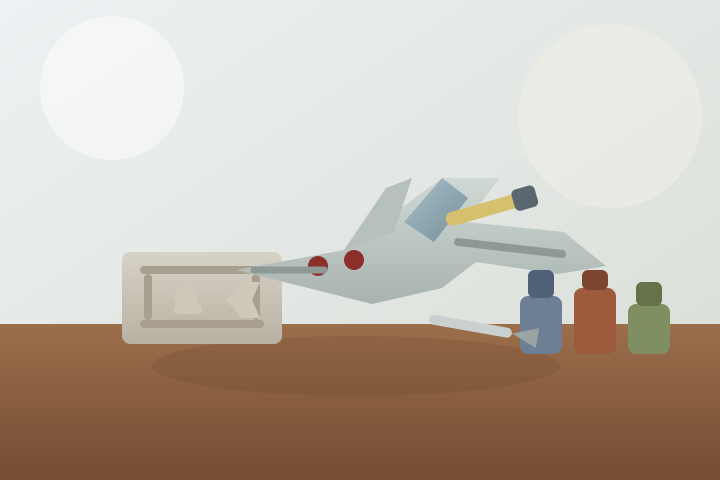
Model making is the craft of building scale replicas of real objects — aircraft, tanks, cars, ships, buildings, and figures — from kits or from scratch, then finishing them with paint, decals, and weathering so they look like the real thing. As a beginner you will spend most of your time on a few core actions: cutting parts out of their plastic sprues, trimming the moulding marks, dry fitting the pieces to check they line up, gluing them together, priming, painting, and adding decals or weathering. The finished model is a small, tangible object you can display, and the appeal is that progress is visible and cumulative: each build teaches you more, and a shelf of finished models is a real result. The honest constraints are that the work is fiddly and slow, the hobby has a real if modest consumable cost, and some materials — styrene cement, enamel paint, and airbrush mist — need ventilation.
Model making suits people who enjoy patience, fine detail, and slow visible progress. It works well if you like following instructions at first, then gradually adding your own choices in paint, weathering, display, or accuracy.
Getting Started
Start with one simple kit you are genuinely interested in, rather than a large collector project. Three decisions cover most of the buying:
- Subject — aircraft, tanks, cars, ships, buildings, or figures. Pick something you find interesting, because you will be looking at it for a while.
- Scale — the ratio between the model and the real object. 1:72 is the most popular aircraft scale, 1:35 the most popular tank scale, and 1:24 is common for cars. A larger scale is easier to handle and paint for a first build.
- Material — plastic (styrene) is the common beginner choice: inexpensive, forgiving, and easy to clean up. Resin holds finer detail but is more fragile and gives off a solvent smell that needs ventilation. Metal and wood kits are less common for a first project.
A small aircraft, tank, or car kit with a modest part count teaches cutting, cleanup, dry fitting, glue control, and basic painting without turning the first build into a long repair job.
Basic Gear
Essential:
- A beginner-friendly plastic kit.
- Nippers (side cutters) for removing parts from their sprues.
- A hobby knife with a fresh blade, and a cutting mat.
- Plastic cement (model glue) suited to the kit.
- Sanding sticks or fine sandpaper for cleanup.
- A few brushes and basic paints if you want to finish the model.
Optional at first:
- Tweezers for small parts.
- Masking tape or liquid mask to protect areas from paint.
- Primer, aerosol or brush-on.
- Decal setting solution.
- Weathering products such as pigments and washes.
- A magnifier or strong task light.
- An airbrush, for advanced painting.
First Session
Read the instructions first — they show the build order, the paint scheme, and where each part goes. Then use the first session to cut out a few parts, trim the moulding marks, and dry fit them before using any glue. Cut parts slightly proud of the moulding, remove the flash, and test that pieces line up before committing them with cement. Focus on neat joins and correct orientation more than speed, because a careful start prevents most of the frustration later.
First Month
Use the first month to finish one modest kit from start to display. A few terms will do most of the work:
- Sprue — the plastic frame that the parts come moulded on.
- Flash — the thin excess plastic at a part’s edges that you trim away.
- Seam — the line where two moulded halves of a part meet; you clean it up so it disappears.
- Dry fit — checking how parts fit together before gluing.
- Panel line — the recessed lines on the model that represent real panel lines; you can clean, fill, or paint them.
- Decal — a printed transfer for markings, numbers, or insignia.
- Weathering — adding realistic wear, dirt, or rust.
Learn how much glue is enough, how long paint really takes to cure, and which part of the process keeps your attention most: assembly, painting, decals, weathering, or scene building.
Costs
Model making starts at a moderate cost because you need both a kit and a small set of tools. A beginner plastic kit typically costs in the region of $10–30 (UK listings are often £8–20), and a basic set of nippers, a hobby knife, a cutting mat, and plastic cement adds a similar amount, so a first build can be started for roughly $30–60 before paint. Prices vary by region and change over time, so check current listings before budgeting. Costs climb if you buy many kits, premium paints, an airbrush, storage racks, or reference books before you have finished the first few builds.
Lower-cost routes exist: second-hand kits and tools are common at model shows and online, and many local model clubs and hobby shops let you try the hobby or borrow tools before you buy much.
Space Needed
The hobby needs very little room. A desk or small table is enough, but a stable surface, good light, and organised storage matter because small parts, blades, and paint lids are easy to misplace. If you use aerosol primer or an airbrush, plan to do that step outdoors or in a well-ventilated space rather than at the desk. Finished models need a shelf or display case, and a growing collection takes more room than a single build.
Solo or Social
Most of the hands-on work is quiet solo work, which suits the focused pace of the hobby. The surrounding community can be highly social. Local model clubs host build nights, workshops, and shows, and the International Plastic Modellers’ Society (IPMS), founded in Great Britain in 1963, runs branches and special interest groups and organises Scale ModelWorld, the world’s largest fine scale modelling show. Online, subreddits such as r/modelmakers and r/tankmodels are active places for work-in-progress feedback and kit questions, and judged contests at clubs and shows give deadlines and structure if you want them.
Common Mistakes
- Starting with a kit that has too many tiny parts.
- Cutting parts too close to the moulding, leaving a nub that is hard to clean up.
- Using too much glue and softening detail or causing squeeze-out.
- Skipping dry fitting before assembly.
- Painting before seams and flash are cleaned up.
- Ignoring the instructions’ build order and paint scheme.
- Over-weathering, which hides the model’s detail.
- Buying a pile of kits before finishing one.
Safety / Accessibility
Two materials deserve specific attention. Styrene-based plastic cement and enamel or oil-based paints release fumes, and airbrushes produce a paint mist, so work in a well-ventilated area and keep your face out of the mist. IPMS(UK)’s safety advice for modellers notes that a dust mask only removes particles and will not give adequate protection against paint spray or the fumes from aerosols, solvents, and adhesives — good ventilation is the first line of defence, with a more suitable respirator for heavier work. Water-based acrylic paints and brush-on primers are the lower-hazard route for everyday work.
Sharp blades are the other main concern. Use a cutting mat, cut away from your hand, and dispose of used blades safely; safety glasses are sensible when trimming brittle plastic, where small shards can fly.
Models and their small parts are a choking hazard for young children, so the hobby is generally a family activity for older children with supervision.
Fine handwork can be tiring, so consider a magnifier, strong task lighting, good seated posture, and regular breaks.
Where It Can Go
Model making can lead toward scale painting, historical research, miniature terrain, diorama building, kitbashing, scratch building, 3D printed parts, or museum-quality restoration and display work. The hobby spans a wide range: casual builders finish models for their own shelf, while the competitive end includes judged contests at clubs and shows, where entries are scored in categories from beginner to professional, and the collectible end includes limited-run and out-of-production kits that hold their value.
References
Last reviewed: 17 August 2026.
Official safety sources:
- IPMS(UK): Safety Advice for Modellers for ventilation, respiratory protection, and skin protection when working with paint spray, aerosols, solvents, and adhesives.
Specialist guides:
- ModelCalcs: Model Scale Reference Chart for what each common scale (1:72, 1:35, 1:24, and more) is used for and how to convert real-world dimensions.
Community resources (optional):
- IPMS(UK) for the International Plastic Modellers’ Society, with branches, special interest groups, a magazine, and the Scale ModelWorld show.
- r/modelmakers for work-in-progress feedback, kit questions, and the broader plastic model community.
Related Hobbies
Miniature painting, dollhouse miniatures, model railroading, 3D printing, woodworking, and painting all sit nearby because they reward careful assembly, visual judgement, and repeated detail work.