Who It Suits
Harp playing brings melody and accompaniment together by plucking strings with both hands. It suits people who enjoy clear, ringing tones, patient practice, and music that can feel complete even when played alone. A few carefully placed notes can be satisfying from the beginning; fluent two-hand playing takes time.
Two common starting points are worth distinguishing:
- Lever harp: individual hand-operated levers raise the pitch of strings by a semitone. These harps come in several sizes and are widely used for folk music, song accompaniment, and solo arrangements. They are instruments to explore for a lifetime as well as a possible route towards pedal harp.
- Pedal harp: foot pedals change the pitches of groups of strings. These larger instruments feature in orchestral and classical playing and bring a greater commitment to cost, space, and transport.
The practical challenges are regular tuning, finding an instrument that fits you, and learning to coordinate your hands. You do not need to read music already, but a teacher can make the early stages much clearer.
Getting Started
Arrange a taster lesson before choosing an instrument. Ask to try a lever harp and discuss the music you hope to play. Size, string spacing, tension, and the lowest available notes all affect whether a harp suits your body and repertoire; the smallest instrument is not automatically the easiest to hold.
Explore rental through a teacher, specialist shop, or harp society. The Clarsach Society offers instrument hire for members and information for new players; check availability and terms before planning around a loan.
Choose a beginner course written for your type and range of harp. Have the teacher demonstrate seating, balancing the instrument, tuning, and relaxed plucking. Ask a specialist to assess a used harp before buying, especially if its condition or repair history is unclear. Camac’s guide to harp types explains differences in size and stringing.
Basic Gear
Essential:
- A playable harp, rented or bought, suited to your lessons.
- A correctly fitting tuning key and a chromatic tuner or tuning app.
- A stable seat at a suitable height and any support specified for the harp.
- A beginner method book or lesson plan.
- A protective cover or case appropriate to storage and transport.
Useful later:
- A music stand and metronome.
- A notebook or recordings to track practice.
- Replacement strings matched to the maker’s string chart.
First Session
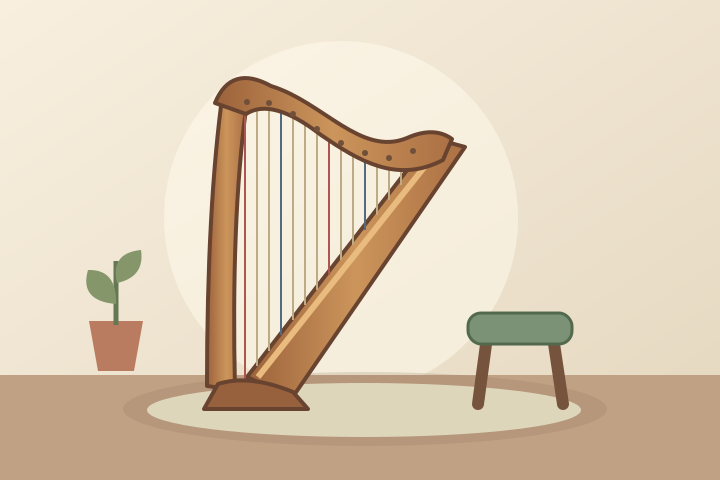
Begin with your teacher helping you balance the harp so your hands are free to play. Identify a few strings in a comfortable middle register. C strings are usually red, and F strings are often dark blue or black; the remaining notes lie between these landmarks. The Harp.com string guide explains colour markers and replacement-string identification.
Learn to tune a few strings with supervision. Check that the key is on the pin belonging to the string you pluck, and make small adjustments. Follow the tuning and lever positions specified for your instrument and lessons: not every lever harp uses the same base tuning. Camac’s resources include a lever-harp tuning demonstration.
Play three or four neighbouring notes slowly, listening to each sound. Repeat a short pattern with one hand, then try the other. Finish with a tiny melody rather than trying to cover the whole instrument in one sitting.
First Month
Aim for ten to twenty minutes on most days, allowing extra time for tuning. Start by finding notes and making an even sound. Then build small finger patterns, steady rhythms, and one easy tune that fits your harp’s range.
As the melody becomes comfortable, add a single bass note or a simple accompaniment with the other hand. Practise each part separately before joining them. Ask your teacher to introduce damping, which stops strings ringing when you want a clearer change of harmony. Keep one piece easy enough to enjoy while another gives you something new to learn.
Costs
The instrument is the main expense, and harp is a relatively costly hobby to start. Renting can spread the initial commitment and help you learn what you need before buying. Request current local quotes for rental or purchase, lessons, a case, delivery, and any deposit or insurance required by the hire agreement.
Budget for replacement strings and occasional specialist adjustment of the levers or pedal mechanism. A pedal harp also requires more planning for transport and servicing. Compare the complete setup and ongoing costs, not just the advertised instrument price.
Space Needed
A lever harp needs a stable playing area with room for the instrument, seat, and both arms to move comfortably. Allow space for a music stand and a safe route around the harp. A pedal harp needs a larger footprint and more thought about doorways, stairs, and transport.
Follow the maker’s storage and climate guidance, and keep the instrument away from busy walkways and direct heat. An acoustic harp remains audible in shared rooms, so agree practice times with the household.
Solo or Social
Solo practice can be quiet and absorbing, while lessons, harp circles, workshops, and beginner ensembles offer encouragement. Try a simple duet or accompany a singer once you can keep a steady pulse. Sharing one short piece with a friend can be a useful first performance goal.
Common Mistakes
- Buying a harp before checking its fit, condition, and range with a teacher.
- Skipping tuning or turning a pin without checking the corresponding string.
- Assuming every harp uses the same base tuning or lever settings.
- Reaching for large chords before small patterns feel comfortable.
- Playing too quickly to notice rhythm, tension, or unwanted ringing.
- Fitting a replacement string without checking its material and gauge.
- Forgetting to budget for a case, lessons, and transport.
Safety / Accessibility
Set the seat and instrument height so you can reach the strings without hunching or stretching. Use short sessions and breaks, and stop if playing hurts. A teacher can help adapt the setup and simplify finger patterns to your reach and comfort.
Lighter harps, suitable stands, larger-print music, learning by ear, and one-hand arrangements can make participation easier. Try supports before buying: a small lap harp still needs to feel secure. Ask for help moving a heavy instrument and follow its maker’s handling instructions.
Where It Can Go
Harp can lead towards traditional tunes, classical repertoire, songwriting, improvisation, arranging, home recording, or ensemble playing. Learning how melody and bass work together also opens a route into music theory and composition. You can deepen your lever-harp playing without needing to move to a pedal harp.
Related Hobbies
Piano, guitar, ukulele, singing, cello, home recording, and music production connect with harp through melody, harmony, accompaniment, or shared performance.
References
Last reviewed: 23 September 2026.
- The Clarsach Society: frequently asked questions — getting started, instrument hire, and harp community information.
- Camac Harps: frequently asked questions — lever and pedal harp types, instrument fit, and string choices.
- Camac Harps: guides and resources — tuning, string replacement, care, and transport demonstrations.
- Harp.com: harp string information — string materials, colour markers, and identifying replacements.