Who It Suits
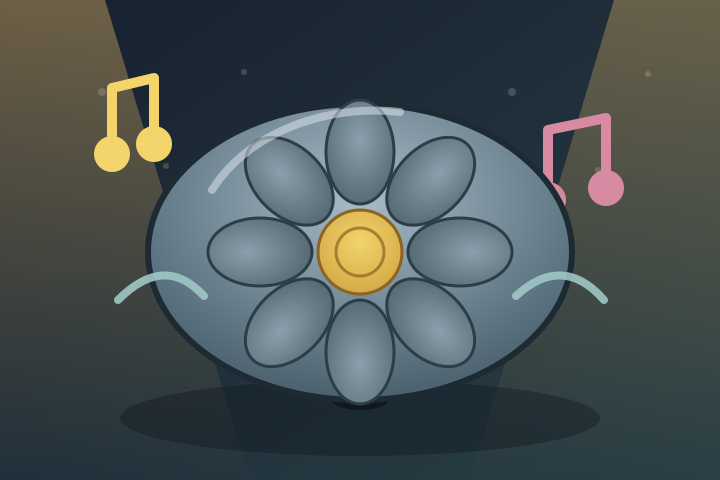
The handpan is a steel percussion instrument shaped like a shallow dome, with a central note called the ding and a ring of shaped tone fields around it, usually seven to nine in total. You play it with your hands, fingers, and palms, resting it on your lap or a cushion, and each field gives a clear, bell-like pitch. As a beginner you will spend most of your time learning to strike each field cleanly, keeping a relaxed wrist, and building simple repeating patterns and rhythms.
It is one of the few instruments where a first touch produces a genuinely musical sound, which makes it welcoming to people who have never played anything before. The honest appeal is that it is quiet, portable, and deeply meditative to play, and the sound carries beautifully in a group. The honest constraints are the price — a new handpan is a significant investment — and the fact that it is tuned to a fixed scale, so you cannot play in every key. It can stay private at home or become social through handpan circles, jam sessions, and festivals, where playing alongside others is a big part of the culture.
The instrument was developed in 2000 by Felix Rohner and Sabina Schärer of PANArt in Bern, Switzerland, who introduced it as the Hang, named after the Swiss German word for lap. It is a member of the steelpan family, and since then many makers around the world have produced their own handpans, each with its own scale, sound, and character.
Getting Started
The first decision is which instrument fits you, and the two things that matter most are the scale and the size.
- Scale is the set of notes the pan is tuned to. D minor is the most common tuning and the best starting point, because most handpan players own a D minor pan and group playing usually revolves around it. Other popular tunings include G minor, A minor, and C major.
- Size ranges from smaller, higher-pitched pans to larger, deeper ones. A mid-size pan in a minor key is a safe all-round choice.
- New or used is the big practical question. New handpans from established makers typically cost well over a thousand dollars or pounds and often sell out quickly, while the second-hand market offers well-kept pans at lower prices. Whatever you choose, it should have no cracks or dents, a clean ring on every field, and a sound you genuinely like.
Learn how to hold the pan, strike each field with a relaxed hand, and find the ding, the fields, and the open gu note on the underside. A teacher, workshop, or structured video course helps a lot, because handpan technique is all about softness and control rather than force.
Basic Gear
Essential:
- A handpan suited to the sound you want (a mid-size pan in D minor is the usual starting point).
- A cushion, padded stool, or soft surface to rest the pan on.
- A padded bag or case for carrying and storage.
Optional, as you need them:
- A stand or cradle for keeping the pan upright when not playing.
- A soft cloth for wiping the steel after playing.
- A metronome app for practising steady patterns.
- A small notebook for writing down rhythms and patterns.
First Session
Sit comfortably with the pan resting on your lap or a cushion, the open side facing down. Find the ding in the centre and tap it gently with a relaxed finger or palm, then move around the ring of fields one by one, listening to each pitch. Try a simple repeating pattern, such as alternating the ding and one field, keeping your wrist loose and your strikes light. Expect a muffled or uneven sound at first — that is normal, and it improves quickly as your hand learns where each field wants to be struck. Stop before your hands feel tired.
First Month
Practise ten to fifteen minutes most days. Learn to strike every field cleanly, learn the gu note on the underside, and build a small set of short patterns you can chain together. Play along with slow, simple music to practise keeping a steady pulse, and record yourself occasionally so you can hear what is improving. If you can, join a local handpan circle or online community early — playing with others is where the instrument really comes alive, and it gives you a reason to keep practising.
Costs
Handpan has a high starting cost because the instrument is handmade from steel, shaped and tuned by a skilled maker, and demand is strong. A new handpan from an established maker typically costs from around a thousand to several thousand dollars or pounds, and limited runs often sell out; prices vary widely by maker, size, and country, so check current prices. A well-maintained used pan can cost noticeably less, and is a sensible way in. Beyond the pan itself, a cushion, a padded bag, and a stand are modest one-off costs, and there are no ongoing consumables.
Space Needed
A chair, a cushion, and a clear spot on your lap are enough to play. Store the pan indoors in a padded bag, away from direct heat, damp, and knocks — the steel shell is sensitive to temperature swings and rain, and dents change the tuning. The handpan is quiet, so it rarely needs a dedicated practice space, and it fits comfortably in a small room, bedroom, or shared flat.
Solo or Social
Handpan is lovely alone, but community adds a lot. Handpan circles, jam sessions, and festivals are a big part of the culture, and because most pans are tuned to a small set of common scales, players can sit down and make music together with little planning. Playing in a circle teaches you to listen, keep a shared pulse, and leave space for others, which improves your solo playing too. Local groups and online communities are easy to find, and many makers and teachers run workshops for beginners.
Common Mistakes
- Hitting the fields hard instead of letting the pan ring.
- Tensing the wrist and fingers, which muffles the sound.
- Chasing complex patterns before the basic strikes feel clean.
- Buying a scale you do not like because it was available.
- Playing in the rain or leaving the pan in a hot or damp car.
- Comparing your pan to a recording and forgetting that each instrument has its own voice.
Safety / Accessibility
Handpan is gentle on the body, but repetitive striking with a tense hand can cause hand, wrist, or forearm strain, so use relaxed technique, short sessions, and regular breaks. If pain, tingling, or stiffness persists, get it checked rather than pushing through. The pan is quiet, so hearing protection is rarely needed, but be aware of volume in loud group settings. The instrument is played seated and at lap height, which makes it accessible to many people, and lighter pans and smaller sizes suit smaller hands.
Where It Can Go
Handpan can lead toward other percussion, drumming, steelpan, singing bowls, and improvisation, and the sense of rhythm and pulse you build transfers to almost any instrument. Many players move into group performance, festival playing, or making music for relaxation and meditation. Exploring the history of the steelpan family, from Trinidad and Tobago to the Hang in Switzerland, opens a rich path into the makers and players who shaped the instrument.
Related Hobbies
Drumming, steelpan, singing bowls, meditation, and music production all sit nearby.
References
Last reviewed: 18 August 2026.
Safety guidance:
- NHS: Repetitive strain injury (RSI) for symptoms and self-care of strain from repeated hand and wrist movement.
Institutions and organisations:
- PANArt for the original Hang and the history of the instrument.
- Handpan Association for the community, events, and a directory of makers and players.