Decision Snapshot
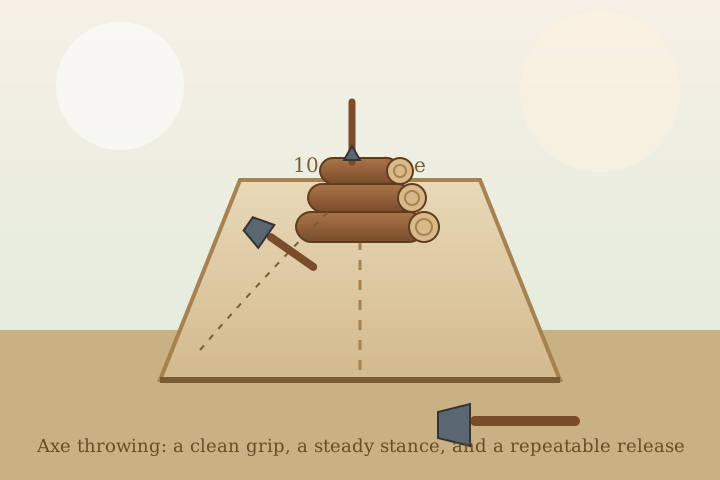
Axe throwing is a precision sport: you stand behind a marked throwing line and throw a steel axe at a wooden target (usually a stack of logs) about 10-15 metres away, aiming to bury the axe head in the wood. A beginner’s first session is almost entirely about a safe grip, a repeatable stance, and a smooth overhand release at controlled speed — not power. It is best approached as a venue-based hobby first: book a session at an axe throwing range, use the venue’s axes, and learn the lane’s safety rules before you buy your own axe.
| Beginner question | Practical answer |
|---|---|
| Best first step | Book a session at a local axe throwing venue or range. |
| Typical first-session cost | Often £10-£25 for a session with a set of throws and venue axes included. |
| Weekly time commitment | A one-hour session once a week is enough to learn; more speeds up progress. |
| Space requirement | A proper venue with a throwing lane, target, and safety barriers; not a backyard hobby. |
| Difficulty | The rules are simple; a repeatable release and consistent accuracy take practice. |
| Fitness level | Low to moderate. Grip strength, shoulder control, and coordination matter more than raw power. |
| Social level | Medium to high. You throw individually, but most people go with friends and venues run group sessions. |
| Good fit if | You like precision, visible skill progress, a bit of adrenaline, and social sessions. |
| Bad fit if | You want a quiet, low-stakes hobby, or you want to practise unsupervised at home. |
Who It Suits
Axe throwing suits people who like precision with a physical edge. Each throw demands grip, stance, focus, and follow-through, and you get immediate, visible feedback — either the axe is buried in the target or it is not. It works well for people who enjoy a social, slightly competitive activity and like watching their accuracy improve session by session.
The activity has ancient roots in axe use, but the modern sport took off in the early 2000s, when commercial axe throwing venues started appearing in the United States and Europe. It is now a popular bar and leisure activity, with organised leagues and competitions in many countries.
It is a poor first choice if the main appeal is owning a heavy axe. Beginner axe throwing is lane discipline, a repeatable release, and coachable repetition before it is equipment collecting.
Key Terms
A few words do most of the work in axe throwing:
- Throwing line — the marked line you stand behind when throwing; the axe must be released in front of it.
- Target — usually a stack of logs or a wooden block; the aim is to bury the axe head in it.
- Axe head — the steel blade and back of the axe; it must be the part that hits the target.
- Handle — the wooden or composite shaft you grip; most beginner axes have a 24-28 inch handle.
- Grip — how you hold the handle; a relaxed, consistent grip is the foundation of a repeatable throw.
- Stance — your foot position and body alignment relative to the target; usually a sideways or square stance.
- Release — the moment the axe leaves your hand; a smooth overhand release is the core skill.
- Follow-through — the arm’s motion after release; a full follow-through keeps the axe’s flight stable.
- Buried / stuck — the axe head is fully in the target; the ideal result.
- Bounce / miss — the axe bounces off or misses the target; you retrieve it only when the lane is clear.
- Lane — one throwing position with its own target; venues have multiple lanes.
- Toss / throw — a single attempt at the target.
- Score — points for where the axe lands; the centre (bullseye) scores highest.
Getting Started
The best first step is a session at a local axe throwing venue — not buying an axe. Venues provide axes, targets, and safety supervision, and most run beginner-friendly sessions or drop-in throws.
Step 1: Find a Venue
Search for an axe throwing venue or range near you. Look for clear information on session length, included throws, minimum age, and safety rules.
Step 2: Book a Session
Book a beginner session or a drop-in set of throws. A session with a few throws and a bit of instruction is better than a long unsupervised set.
Step 3: Learn the Grip and Stance
Your first goals are simple: hold the axe with a relaxed but firm grip, stand with a consistent stance, and release the axe smoothly overhand at controlled speed.
Step 4: Throw at Controlled Speed
Start at about half power. A clean, repeatable release at controlled speed beats a hard throw that loses control.
Step 5: Watch Every Throw
Watch where each axe lands relative to where you aimed. This is the fastest way to learn what your release is doing.
Step 6: Buy Your Own Axe Later
Once you are committed, buy a beginner throwing axe (usually 2-3 lb, 24-28 inch handle). Venues often sell them or can recommend a good one.
What To Do This Week
- Find two nearby axe throwing venues.
- Ask what the first session includes and whether axes are provided.
- Book a session rather than buying an axe.
- Wear closed-toe shoes and close-fitting sleeves; tie long hair back.
- After the session, note whether you enjoyed the rhythm and the venue atmosphere.
Basic Gear
Essential:
- Venue-provided axes for your first sessions.
- Closed-toe shoes with grip.
- Close-fitting sleeves; tie long hair back.
Optional at first:
- A beginner throwing axe (2-3 lb, 24-28 inch handle) once you are committed.
- A glove or grip aid if your hands get sweaty.
- A small bag to carry your axe.
Specialist items — competition axes, custom handles, grip tape — can wait until you know what you like.
First Session
Choose an uncrowded time and throw only a few sets if a full session feels long. A useful routine:
- Warm up with a few gentle, controlled throws before the first set.
- Throw at controlled speed — about half power is enough to learn a clean release.
- Watch every axe’s full flight and landing point so you can see what your release is doing.
- Keep a consistent grip and stance for every throw.
- Only retrieve your axe when the lane is clear and the person running the lane says it is safe.
First Month
Throw one session a week and add short practice. A realistic sequence:
- Weeks 1-2: settle on a repeatable grip, stance, and overhand release at controlled speed.
- Weeks 3-4: start aiming for the centre of the target instead of just hitting it, and build up your power gradually.
- Ongoing: learn lane etiquette and safety, and join a local league or casual group if you want feedback from experienced throwers.
Two habits accelerate progress: review where your axes land relative to where you aimed, and practise your release at controlled speed until it feels automatic.
Costs
Axe throwing is inexpensive to try. A session at a venue typically costs £10-£25 for a set of throws with venue axes included, and many venues bundle it with a drink or a bar visit. When you are ready to buy your own axe (usually after a few sessions), a beginner throwing axe costs roughly £30-£80. Costs rise with competition axes, custom handles, league fees, and travel to events.
Space Needed
Axe throwing needs a proper venue with a throwing lane, a target, and safety barriers. The lane is usually 10-15 metres from the throwing line to the target. It is not a casual backyard hobby — a steel axe is a dangerous object, and you need a controlled environment with a backstop, a clear lane, and supervision. Check the venue’s safety rules before you throw.
Solo or Social
Axe throwing works well alone because you can practise at your own pace, but it is also strongly social. Most people go with friends, and venues run group sessions, leagues, and casual competitions. Playing with experienced throwers can speed up learning if the tone stays relaxed.
Common Mistakes
- Throwing too hard and losing control.
- Gripping the axe too tightly.
- Not keeping a consistent stance.
- Not watching the full flight and landing point.
- Retrieving your axe before the lane is clear.
- Buying a heavy competition axe before learning a clean release.
- Skipping the warm-up and throwing at full power from the start.
Safety / Accessibility
The main risks are a missed or bounced axe, slips, and overuse from repeated throwing. Venues make the core safety habits explicit: stay behind the throwing line, keep the lane clear, only retrieve your axe when it is safe, and follow the venue’s commands. A few more:
- Check the lane before every throw — make sure no one is in front of you.
- Wear grippy footwear and watch for wet or uneven ground.
- Grip the axe firmly but not tightly to avoid hand and wrist strain.
- Warm up your shoulder and wrist and build throwing volume gradually to avoid overuse.
Axe throwing is fairly accessible: the throw is an overhand motion that most people can do, lighter axes suit people with less upper-body strength, and many venues have adjustable lane distances. Choose a venue and axe weight that match your strength and comfort.
Where It Can Go
Axe throwing can lead toward local leagues, casual competitions, organised tournaments, axe collecting, bar and social events, or teaching new throwers.
References
Last reviewed: 18 August 2026.
This guide covers casual and beginner axe throwing. Rules, fees, and access vary by country, venue, and event, so check the venue’s information before you go.
Related Hobbies
Archery, disc golf, fencing, bowling, darts, and other precision and target hobbies all sit nearby.
Frequently Asked Questions
Is axe throwing hard to learn? The basics — a safe grip, a consistent stance, and a smooth release — are learnable in one session. Getting consistently accurate takes a few sessions of deliberate practice. The learning curve is gradual rather than steep.
How much does a session cost? A beginner session or a set of throws at a venue typically costs £10-£25, with venue axes included. Prices vary by location and what is bundled.
Do I need to buy my own axe to start? No. Venues provide axes for your sessions. Buy your own beginner throwing axe (usually 2-3 lb) only once you know you will keep going.
What should I wear? Wear closed-toe shoes with grip and close-fitting sleeves. Tie long hair back and avoid loose clothing that could catch.
Is axe throwing safe? Yes, when you follow the venue’s safety rules: stay behind the throwing line, keep the lane clear, and only retrieve your axe when it is safe. A steel axe is dangerous, so always throw at a supervised venue, not in a backyard.
How old do you have to be to start? Most venues set a minimum age (often around 18, or younger with supervision) and may require a parent or guardian for minors. Check the venue’s policy.